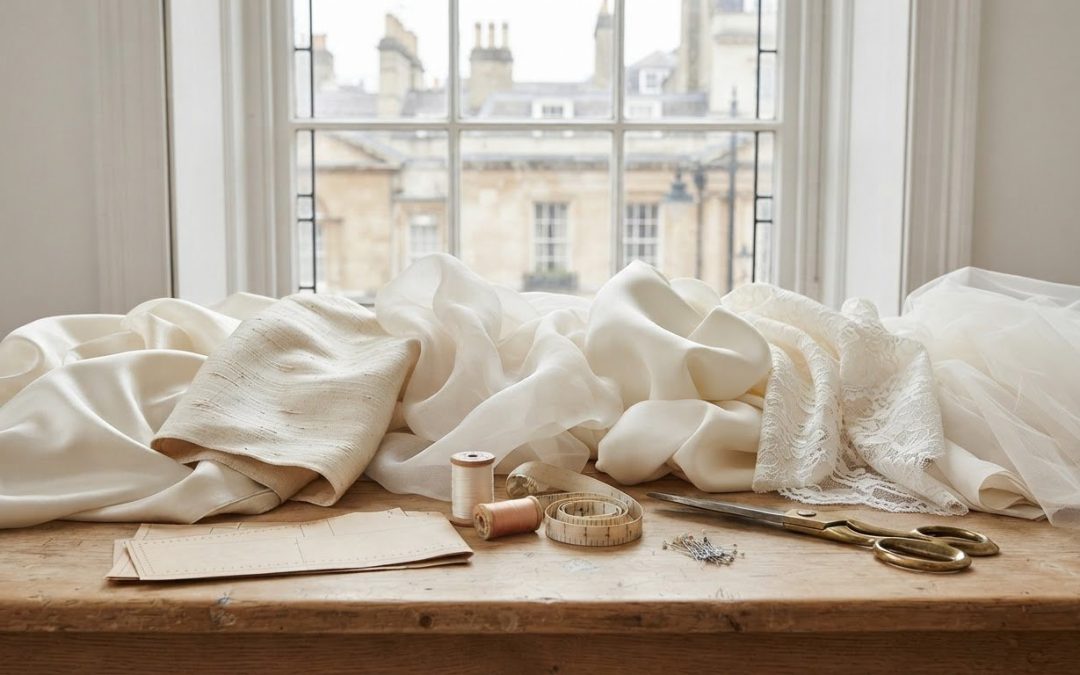
Yes, silk bridal fabric is available in the UK, with options including dupion, organza, satin, velvet, habotai and raw silk. Bridal couture fabrics in the UK also include choices such as tulle, lace and crepe, each bringing a different drape, texture and finish. The price per metre varies with the fabric and its construction.
Choosing wedding fabric involves more than finding a beautiful colour. How it falls, catches the light and feels against the skin helps define a gown, while its width and finish affect how it works with your design.
This guide explains how prices per metre vary across bridal fabric categories, what distinguishes popular types and finishes, and how to compare options for your dress. You’ll also find practical points to consider when selecting fabric, from the look you want to the amount your pattern requires, so you can move from inspiration towards a considered choice.
Key Takeaways
- Match fabric character to your design: compare the fluidity of chiffon and organza with the structure and sheen of satin, crepe and mikado.
- Read metre prices alongside fabric width, composition and finish to make a more useful comparison between categories.
- Use your chosen pattern and the gown’s construction to guide fabric selection and planning, rather than relying on appearance alone.
- Explore Hand Woven or Power Woven Indian Silk Dupion, or choose a Natural Silk Pack or Silk Theme Pack for a silk-led project.
Why Choose a Genuine Bridal Fabric Specialist?
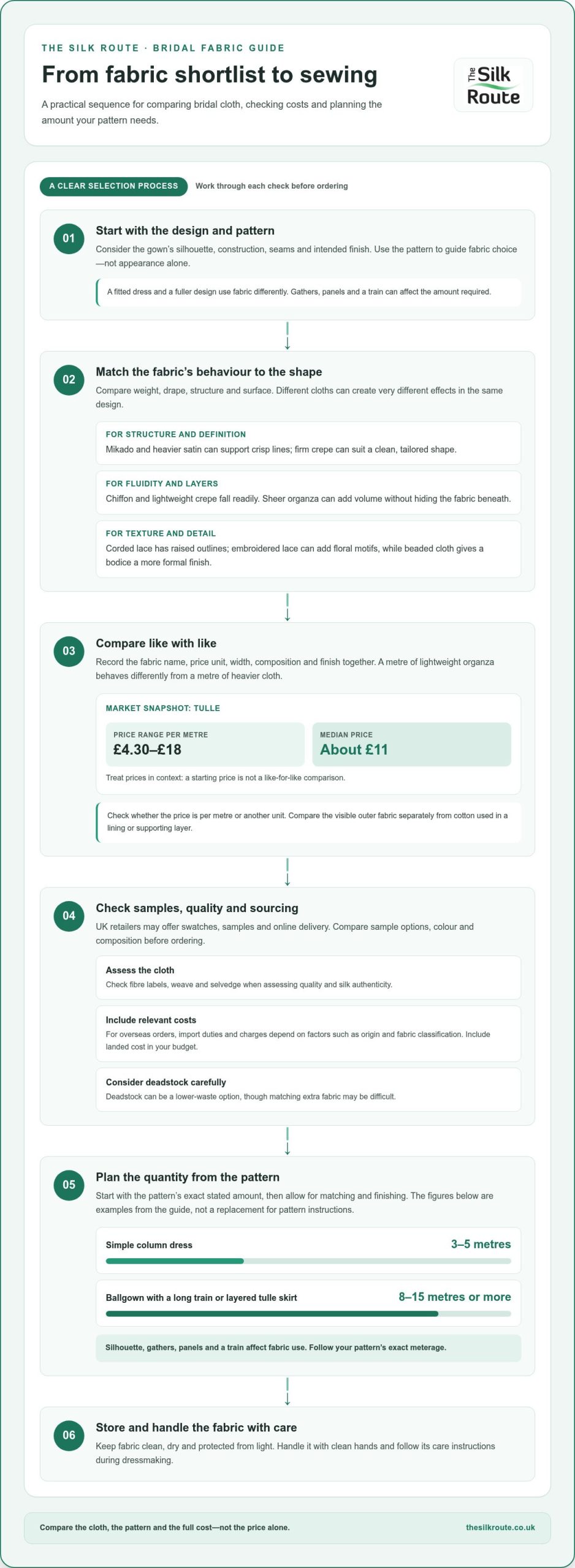
Match the fabric’s weight, drape and surface to the gown’s silhouette. Compare each fabric type with your pattern and the finish you want.
Satin, mikado, chiffon and organza
Satin has a smooth face that reflects light, while mikado feels firmer and can suit sculpted shapes. Chiffon falls softly in gathered layers; organza is sheer and can hold more volume. Crepe has a textured surface and fluid movement, though heavier crepe can lend definition to structured silhouettes. Compare a crepe’s weight and drape with your design, and consider whether silk or silk-blend crepe suits the finish. A lining can support the outer fabric and affect how the garment feels.
Choosing fabrics for seasons and wedding styles
For a summer wedding, chiffon or organza can create airy layers; for a formal winter occasion, satin, mikado or heavier crepe can give a gown more body. These are starting points, not seasonal rules. Compare how each fabric moves and feels, then consider its texture and structure alongside the venue, silhouette and pattern. The fabric should work with the whole design.
Bridal fabric sourcing, checks and care
UK retailers may offer swatches, samples and online delivery; compare sample options, colour and composition before ordering. Check fibre labels, weave and selvedge to assess quality and silk authenticity. For overseas orders, import duties and charges depend on factors such as origin and fabric classification, so include landed cost in your budget. Deadstock can be a lower-waste option, though matching extra fabric may be difficult. A simple column dress typically needs 3 to 5 metres; a ballgown with a long train or layered tulle skirt can need 8 to 15 metres or more. Follow your pattern’s exact meterage. Store fabric clean, dry and protected from light, handle it with clean hands, and follow its care instructions during dressmaking.
Bridal fabric prices per metre
Bridal fabric prices vary with fibre, weave, finish and the amount of fabric needed. A market snapshot puts tulle between £4.30 and £18 per metre, with a median of about £11. Treat each figure in context: a starting price is not a like-for-like comparison.
For a useful comparison, note the fabric name, price unit, width and finish together. A metre of lightweight organza behaves differently from a metre of heavier cloth, even if the prices look similar. Check whether the price is per metre or another unit, and work out the amount required by your pattern before comparing total fabric costs.
Construction also affects a fabric’s look and value. Double or corded lace has added surface detail, while plain cloth offers a different effect and may suit another part of the dress. For a detailed bodice, consider how the fabric’s texture and embellishment work with the design. If comparing prices, distinguish the visible outer fabric from cotton used in a lining or supporting layer.
Silhouette matters, too. A fitted wedding dress and a fuller design use fabric differently, while gathers, panels and a train affect the amount required. Start with the pattern’s stated meterage, then allow for matching and finishing. This gives you a more useful estimate than judging a collection by its lowest displayed price.
For silk-led designs, compare the luminous finish of silk organza fabrics with the texture and structure your pattern calls for. The right choice depends on the garment’s role, from a sheer overlay to a considered layer, rather than price in isolation.
Bridal fabric categories
Sort bridal cloth by structure, transparency, surface detail and stretch to narrow your choices before settling on a weave or finish. A classic gown might pair a smooth outer fabric with a delicate overlay, while embroidered lace can define a floral design. Consider how each layer contributes to the silhouette.
Structured fabrics give a bodice or skirt more definition. Mikado and heavier satin can support crisp lines, while firm crepe can suit a clean, tailored shape. Check the pattern’s construction and seams: a fabric with body can hold sculpted forms, but may behave differently from fluid material around gathers or fitted panels.
Fluid fabrics bring movement to soft skirts and draped details. Chiffon and lightweight crepe fall readily and can suit flowing shapes. Organza provides a sheer layer that can add volume without hiding the fabric beneath. Drape a small section against the intended pattern, since the same material can look quite different when gathered, layered or left loose.
Decorative fabrics add interest through texture and surface detail. Corded lace has raised outlines; embroidered lace can introduce floral motifs, while beaded cloth gives a bodice a more formal finish. For an overlay, assess the design beneath as well as the lace itself. An open pattern reveals more of the base fabric; a denser motif provides more coverage.
Stretch fabrics offer give that can suit close-fitting dress shapes, but stretch affects how a pattern sits and moves. Check whether the pattern calls for stretch, then match the fabric’s direction of give to its construction. In a layered design, distinguish the outer cloth from the lining and overlay. Comparing these categories helps turn inspiration into a practical fabric shortlist.
Bridal fabric types and finishes
Weight, weave and surface finish affect how bridal fabrics behave. Compare them with the pattern, intended structure and wedding setting. A fluid cloth may skim the body, while a firmer fabric can hold a sculpted line. Small differences in texture can also change how colour appears across folds and seams.
Crepe offers a softly textured face, while satin brings a smooth, reflective finish. Ivory Liquid satin-back crepe is 150cm wide. Luxury Satin Backed Crepe in ivory is approximately 215gsm, giving weight and drape useful details to assess together. White Monaco Crepe is 180gsm. These examples show why a fabric name alone cannot describe its feel or performance.
Look closely at the fabric’s reverse as well as its face. Satin-backed crepe combines a satin surface with a crepe side, giving a dressmaker options for visible panels and details. Luxury Satin Backed Crepe in silver is 150cm wide. Before cutting, consider which side will show, how the fabric falls at seams, and whether its weight supports the pattern’s structure.
For a veil, soft tulle netting, sheer organza and fine embroidered lace trims offer different effects. Organza can form a crisp layer, while embroidered lace adds pattern. Compare overlay colours in daylight rather than relying on a screen, as lighting can alter their appearance. Also check how trims meet at joins.
Make a shortlist by recording each fabric’s name, width, weight and finish, then compare those details with your pattern. A sample lets you handle the surface and see how it moves before deciding where it fits in the design.
The Silk Route: Hand Woven Indian Silk Dupion
If silk is central to your bridal fabric selection, The Silk Route supplies Hand Woven Indian Silk Dupion and Power Woven Indian Silk Dupion. These offer two options to consider for your project. Natural Silk Packs and Silk Theme Packs provide another way to explore silk choices.
Start with your pattern, the garment’s intended shape and the role silk will play in the design. Compare the dupion options with the fabric types you are considering, or explore a pack if you are developing a palette across several materials. A clear shortlist connects your fabric choice to the look you want.
For silk fabric enquiries, contact The Silk Route or visit thesilkroute.co.uk.
Let your design take shape
As you move from browsing to choosing, let one design intention guide your next decision: how you want the fabric to catch light, hold shape or soften a line. Keep that intention alongside your pattern and colour notes, so each option serves a purpose.
For a silk-led project, The Silk Route offers Hand Woven Indian Silk Dupion, Power Woven Indian Silk Dupion and Natural Silk Packs. These are starting points for exploring how silk could bring texture and character to your design. Your search for bridal couture fabrics in the UK can become a considered choice, shaped by the mood and construction of the garment.
Give your creative process room to evolve. A fabric that feels right in the hand can become the quiet centre of a design.
Take the next step with confidence and let your vision unfold.
Frequently Asked Questions
Do you sell silk bridal fabric?
Yes. The Silk Route sells silk fabrics for bridal dressmaking, including silk satin, silk organza and Indian silk dupion. It supplies fabric rather than finished wedding dresses, so makers can choose materials for their own patterns and construction. Hand-woven dupion has a more textured surface, while power-woven dupion is less textured. Silk organza offers a sheer option for layered designs.
What fabric is best for a wedding dress?
The right fabric depends on the dress shape and finish you want. For a defined silhouette, consider a cloth with more body; for flowing movement, look at softer fabrics. Silk dupion has a textured surface, while silk chiffon is soft, sheer and lightweight. Drape a sample over key areas of the pattern, such as the bodice and skirt, to assess the effect.
What fabrics are commonly used in bridal couture in the UK?
Common choices include satin, mikado, crepe, chiffon, organza, tulle and lace. The bridal couture fabrics UK dressmakers select may combine a structured main fabric with sheer layers or embroidered details. Silk options include satin, organza and dupion. The right combination depends on the design: a simple gown may highlight one fabric’s texture, while layered styles can contrast several surfaces.
How much do bridal couture fabrics cost per metre in the UK?
For bridal couture fabrics UK shoppers compare, the market price band for tulle is typically £4.30 to £18 per metre, with a median of about £11. This range applies to tulle, not silk or a particular retailer’s products. Prices vary by fibre, weave and finish. Compare like with like, then use your sewing pattern’s meterage to estimate the fabric total.
What is the difference between silk satin, duchess satin, mikado and crepe for wedding dresses?
Silk satin has a smooth face and soft lustre; duchess satin is often chosen for a more substantial, formal shape. Mikado has a firmer handle that supports defined lines. Crepe has a subtly textured surface and can fall fluidly or feel more structured, depending on its weight. Compare samples with your pattern to judge drape, surface and finish.
Which UK fabric shops specialise in silk, lace, tulle and bridal embellishments?
The Silk Route offers Hand Woven and Power Woven Indian Silk Dupion, as well as Natural Silk Packs and Silk Theme Packs.