Popular wedding dress fabrics are not interchangeable: satin, lace, chiffon, organza and brocade each create a distinct look and feel. The right wedding dress material fabric depends on the silhouette, season and movement you want, from satin’s polished structure to chiffon’s soft, airy drape. Your choice shapes how the gown looks, feels and moves throughout the day.
It’s natural to focus first on colour or design, but fabric brings those details to life. The right material can give a bridal gown a graceful fall, a sculptural outline or delicate layers of texture.
Here, you’ll learn how popular fabrics compare and which options suit bridal gowns, bridesmaid dresses and bridal parties. We’ll look at their textures, drape and structure, then consider how to choose a fabric that fits the occasion and feels comfortable to wear.
Key Takeaways
- Compare chiffon, crepe, lace, Mikado, organza, satin and tulle by their drape, structure and texture to find a fabric that supports your gown’s silhouette.
- For bridesmaid dresses, balance the wedding’s overall look with fabrics that let each outfit move comfortably and feel cohesive alongside the bridal gown.
- Satin ranges from fluid to structured, so its weight and finish can shape the feel of a dress as much as its polished appearance.
- Match fabric to the venue, season and personal style, then explore silk options such as Hand Woven Indian Silk Dupion for a distinctive finish.
What are the most popular fabrics for wedding dresses?
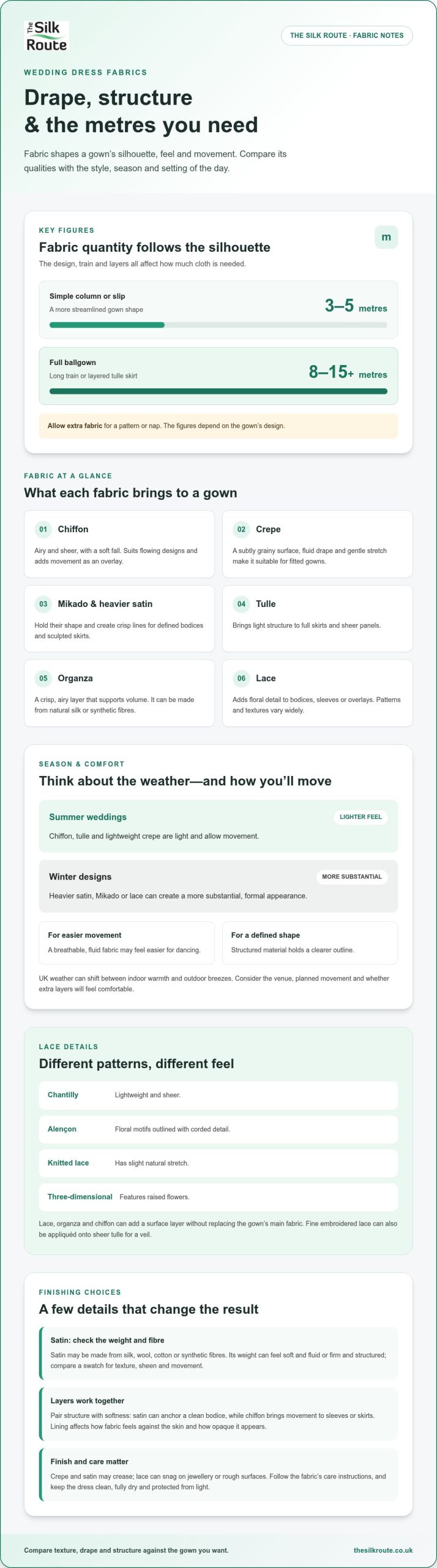
Chiffon, crepe, lace, Mikado, organza, satin and tulle are popular choices. Differences in drape, texture and structure shape each gown’s silhouette and feel.
Fabric overlays
Lace, organza and chiffon overlays add another surface without replacing the gown’s main fabric. Chiffon falls softly over a skirt, while organza holds light volume; lace brings floral detail to a classic bodice or sleeves. For veils, fine embroidered lace can be appliquéd onto sheer tulle, adding definition without covering the whole design.
Lace varies in pattern and feel: Chantilly is lightweight and sheer, Alençon features floral motifs outlined with corded detail, and knitted lace has slight natural stretch. Three-dimensional lace has raised flowers, while traditional lace used fibres such as silk, linen and cotton.
Choosing fabric for weather and comfort
For a summer wedding, chiffon, tulle and lightweight crepe are light and allow movement. Winter designs often use heavier satin, Mikado or lace for a more substantial, formal appearance. UK weather can shift between indoor warmth and outdoor breezes, so consider the venue, planned movement and whether layers will feel comfortable.
Natural silk and synthetic fibres offer different textures and finishes; organza, for example, can be made from either. Compare the fabric against your skin and move in it: a breathable, fluid choice may feel easier for dancing, while structured material holds a defined shape.
Crepe has a subtly grainy surface, fluid drape and gentle stretch, making it suitable for fitted gowns. Mikado and heavier satin create crisp lines; tulle brings light structure to full skirts and sheer panels. Chiffon’s airy quality suits flowing designs, while organza supports layered volume.
Choose cleaning and storage methods according to the fabric’s care instructions; keep the dress clean, fully dry and protected from light. Fabric quantities depend on the design: a simple column or slip typically needs 3 to 5 metres, while a full ballgown with a long train or layered tulle skirt can need 8 to 15 metres or more. Allow extra for patterned fabric or a nap.
Bridesmaid and bridal party fabrics
Bridesmaid dresses can echo the bridal gown through shared colour, texture or finish without matching it exactly. Choose fabrics that work together in photographs and feel comfortable from the ceremony through the celebrations.
Silk and silk-blend bridal fabrics
Silk brings a soft lustre and fluid movement to bridalwear, while natural variations give each garment a distinctive surface. Silk chiffon offers a light, sheer layer; silk satin has a smoother, more reflective finish. Crepe can be made from silk or blended fibres, so compare composition and feel rather than relying on the fabric name alone.
For a bridal party, repeat one silk texture across different silhouettes to create a cohesive look. Natural Silk Packs can help you explore silk textures and colour relationships for a coordinated design.
Bridal fabric types and finishes
Pair a structured fabric with a softer companion: satin can anchor a clean bodice, while chiffon adds movement to sleeves or skirts. Organza provides a crisp, airy layer, and lace introduces delicate floral detail. Lining affects how fabric feels against the skin and how opaque it appears, so consider the layers together.
For bridesmaid dresses, a matte finish can sit quietly beside a lustrous bridal gown. Texture, sheen and drape matter as much as colour matching.
Bridalwear fabric colours
Choose colours in relation to the gown’s shade, flowers and setting. Ivory beside white can make the difference more visible, while complementary tones create contrast without making each garment feel unrelated. View fabric samples together in daylight, when subtle undertones are easier to compare.
For a coordinated bridal party, select a shared colour family, then vary the silhouettes or finishes. This lets delicate chiffon and more structured satin work together without requiring identical dresses.
Crepe and satin may crease during wear, while lace can snag on jewellery or rough surfaces. Pale colours can also show marks more readily, so consider the day’s activities when selecting fabric and finish.
Satin fabrics
Satin can be made from silk, wool, cotton or synthetic fibres, so fibre content matters alongside its surface. Its weight may feel soft and fluid or firm and structured, offering options for different silhouettes and seasons. Compare a swatch for texture, sheen and movement rather than relying on the fabric name alone.
For a structured gown, Mikado and heavier satins hold their shape and create crisp lines. They suit clean silhouettes where a defined bodice or sculpted skirt is part of the design. A lighter satin falls more fluidly, bringing movement to a skirt. Choose the weight according to whether the dress should keep a firm outline or flow as you move.
Duchess satin is traditionally thicker and heavier, with a drape described as impeccable. Its substantial character can lend a wedding dress a luxurious presence, particularly in a formal silhouette. Consider how its weight works with the gown’s construction: a voluminous skirt and fitted bodice make different demands on the fabric.
For a satin wedding dress, examine both sides of the cloth and consider how seams and folds will catch the light. Satin’s sheen can make a simple cut feel striking, while embellishment adds another layer of texture. Silk satin is one way to explore satin in silk; compare its feel and fall with other samples in your collection.
Careful pressing helps preserve the finish. Press satin on low heat from the reverse, ideally with a pressing cloth between the iron and fabric. This practical step is especially useful before a fitting, when smooth seams and clean lines make it easier to assess the gown’s shape.
Wedding dress fabric types
Choose wedding dress material fabric by starting with the gown’s purpose: its silhouette, setting and required movement. Compare drape, opacity and surface against your design rather than choosing by appearance alone. Fibre content matters too: silk, cotton, wool and synthetic fibres each bring different qualities to a fabric’s feel and fall.
Crepe can be made from silk, wool, cotton or polyester, while organza is traditionally silk or synthetic. Traditional lace used silk, linen or cotton. These names describe different fibres and constructions, not identical qualities. Lay swatches beside your pattern and compare how each handles folds, seams and the details your design calls for.
For a formal bodice, consider the construction alongside the cloth. Boning supports the shape, while a fine dressmaking zip or button loops provide a closure. Smooth lining creates an inner layer; Microtex needles suit precise stitching. Match these elements to the outer fabric, since delicate lace and structured materials make different demands on seams.
Opacity also affects comfort. Wedding fabrics should drape flexibly while concealing undergarments, and lining can balance sheerness with coverage. Lace dresses may use chai or white lining, each creating a different contrast beneath floral motifs. Embroidered lace stitched onto tulle can be cut into appliqués for bodices or illusion backs, allowing you to place detail selectively.
Before settling on wedding dress material fabric, pin a sample over the intended lining and assess it in natural light. Check how it behaves at the shoulder, waist and hem. View patterned cloth with its motifs aligned, then consider whether its weight supports the design. A natural silk sample can also help you compare texture and colour with other options.
The Silk Route: Hand Woven Indian Silk Dupion
The Silk Route offers Hand Woven Indian Silk Dupion for dressmakers seeking silk with a distinctive woven texture for bridal designs. Its character can bring depth to a structured bodice, sleeves or decorative panels. Power Woven Indian Silk Dupion offers another woven silk option to compare with the gown’s silhouette and finish.
If you’re comparing shades and textures, Natural Silk Packs and Silk Theme Packs offer ways to explore silk selections for a bridal project. Consider how each fabric’s surface, colour and structure will work with the design, lining and other details.
For a closer look at silk options for your project, visit The Silk Route.
Shape your bridal vision in silk
As you move from inspiration to a design decision, picture the finished look in motion: how you want the skirt to turn, the bodice to hold its line and the bridal party to fit the same visual story. That image can guide your fabric shortlist more clearly than a mood board alone. Let your wedding dress material fabric express the character you want for the celebration, rather than simply following a familiar convention.
For dressmakers exploring silk, The Silk Route offers Hand Woven Indian Silk Dupion, Power Woven Indian Silk Dupion and Natural Silk Packs. These options provide a starting point for considering texture and tone alongside your design. Bring your preferred silhouette and colour direction into the selection process, then let the material help refine the details.
Your bridal vision is yours to shape. Explore silk fabrics and packs from The Silk Route, and choose the materials that bring your design to life.
Frequently Asked Questions
How do I match a lining or a shade to my dress fabric?
Compare the lining beneath the outer fabric in daylight, since layers can alter how a shade appears. White or chai lining beneath lace creates different effects, while a close colour match softens the contrast. The Silk Route offers free Colour Consultancy. “We can colour match where possible and sometimes have stock in the studio that is not available on the website.”
What fabrics are commonly used for wedding dresses?
Common choices include satin, lace, chiffon, crepe, organza, Mikado and tulle. Look beyond the fabric name: satin, for example, can be made from silk, wool, cotton or synthetic fibres, and its weight changes its drape. Check fibre content and surface finish when comparing samples to understand how a fabric may feel and behave in your design.
How do satin, silk, chiffon, tulle, lace and organza compare for wedding dresses?
Satin gives a smooth, lustrous surface, while silk describes a fibre that can be woven into different fabrics. Chiffon is sheer and flowing; tulle is netted and offers light structure. Lace adds patterned detail, and organza feels light yet holds volume. These materials can also be combined: a lace overlay over a smooth base, for example, changes the gown’s texture without replacing its foundation.
What wedding dress fabric is best for different silhouettes and styles?
Match the fabric’s structure to the silhouette: fluid chiffon or crepe suits a gown designed to skim the body, while firm satin or Mikado supports a defined outline. Tulle and organza can build volume in a full skirt. For a clean column dress, consider how the cloth falls along the body; for a ballgown, assess how it holds layers and shape.
How much does wedding dress fabric cost per metre in the UK?
There isn’t one useful per-metre figure for every wedding fabric: price varies with fibre, weave, finish, width and specialist work. Natural silk and synthetic fabrics are not directly comparable on price. For a fair comparison, assess fabrics with similar fibre content and width, then consider whether the required quantity and pattern matching affect the total material needed.
What are the pros and cons of natural versus synthetic wedding dress fabrics?
Natural silk has a soft lustre, fluid movement and natural surface variations. Synthetic fibres can also be used for fabrics such as organza; compare the fabric’s feel and finish against your skin before choosing.