
The most breathtaking rooms aren’t defined by their architecture, but by the way the light catches the subtle, organic slubs of a hand-woven weave. Choosing the perfect silk fabric for soft furnishings often feels like a delicate balancing act between your aesthetic dreams and the practicalities of daily life. You likely crave that unmistakable lustre, yet perhaps you hesitate, confused by silk weights or worried about sun damage. It’s an uncertainty that often prevents a beautiful space from reaching its full, sensory potential.
This expert artisan checklist is designed to transform that hesitation into creative confidence. By mastering the interplay of weight, weave, and texture, you’ll learn how to select materials that offer both structural integrity and evocative beauty. We’ll guide you through the distinctive characteristics of hand-woven Indian silk and the secrets to protecting your favourite pieces. From the crisp handle of organza to the indulgent depth of silk velvet, you’re about to discover how to curate a home that feels truly bespoke and intentionally crafted.
Key Takeaways
- Discover why 100% silk fabric for soft furnishings offers a depth of colour and organic texture that synthetic alternatives simply cannot match.
- Learn to distinguish between Hand Woven Indian Silk Dupion for structured drapery and the sumptuous weight of silk velvet for heirloom-quality upholstery.
- Protect your investment by understanding the vital role of interlining and strategic placement to shield delicate fibres from UV damage.
- Master the art of bespoke design by using coordinated theme packs and hand-crafted saree ribbons to add unique artisan signatures to your cushions.
The Sensorial Foundation: Why Choose Silk for Soft Furnishings?
Imagine a room at dusk where the curtains don’t just hang, they glow with a soft, inner radiance. This ethereal quality is why designers return to silk fabric for soft furnishings time and again. Unlike the flat, static appearance of man-made materials, the properties of silk allow it to interact with light in a way that feels almost alive. It’s the ultimate choice for those seeking to create a boutique atmosphere that feels both curated and comfortable.
Choosing Hand Woven Indian Silk Dupion offers a distinctive character born from ancient tradition. Those tiny, organic slubs and variations in the weave aren’t flaws; they’re the fingerprint of the artisan. This rhythmic, tactile depth is something power-woven alternatives simply can’t replicate. Beyond the aesthetic, it’s a choice for well-being. Silk is naturally hypoallergenic and breathable, resisting dust mites whilst allowing air to circulate freely. It creates a healthier home environment that feels as good as it looks.
The Lustre and Colour of Artisan Silk
The secret to that unmistakable shimmer lies in the fibre itself. Silk filaments have a unique triangular, prism-like structure that refracts incoming light at various angles. This creates a multi-dimensional effect where the colour appears to shift as you move through the room. When you invest in natural fibres, you’re choosing a depth of pigment that feels incredibly rich and sophisticated. It adds a layer of timeless luxury that synthetic dyes can’t hope to match.
Silk vs. Synthetics: The True Value
Run your hand across a piece of polyester imitation and then across 100% natural silk. The difference is immediate. Synthetics often feel slippery or plastic-like, whereas real silk has a warm, substantial handle that invitations touch. It’s also a more sustainable choice for the conscious creator. Natural silk is biodegradable and has a much lower environmental footprint than petroleum-based textiles, providing lasting beauty without compromise.
The Artisan Checklist: Selecting the Right Silk Type
Selecting the right silk fabric for soft furnishings is an act of curation that defines the soul of a room. It’s about more than just colour. The weight and weave influence the movement of light and the tactile comfort of your home. Each variety offers a unique structural personality that dictates its best use.
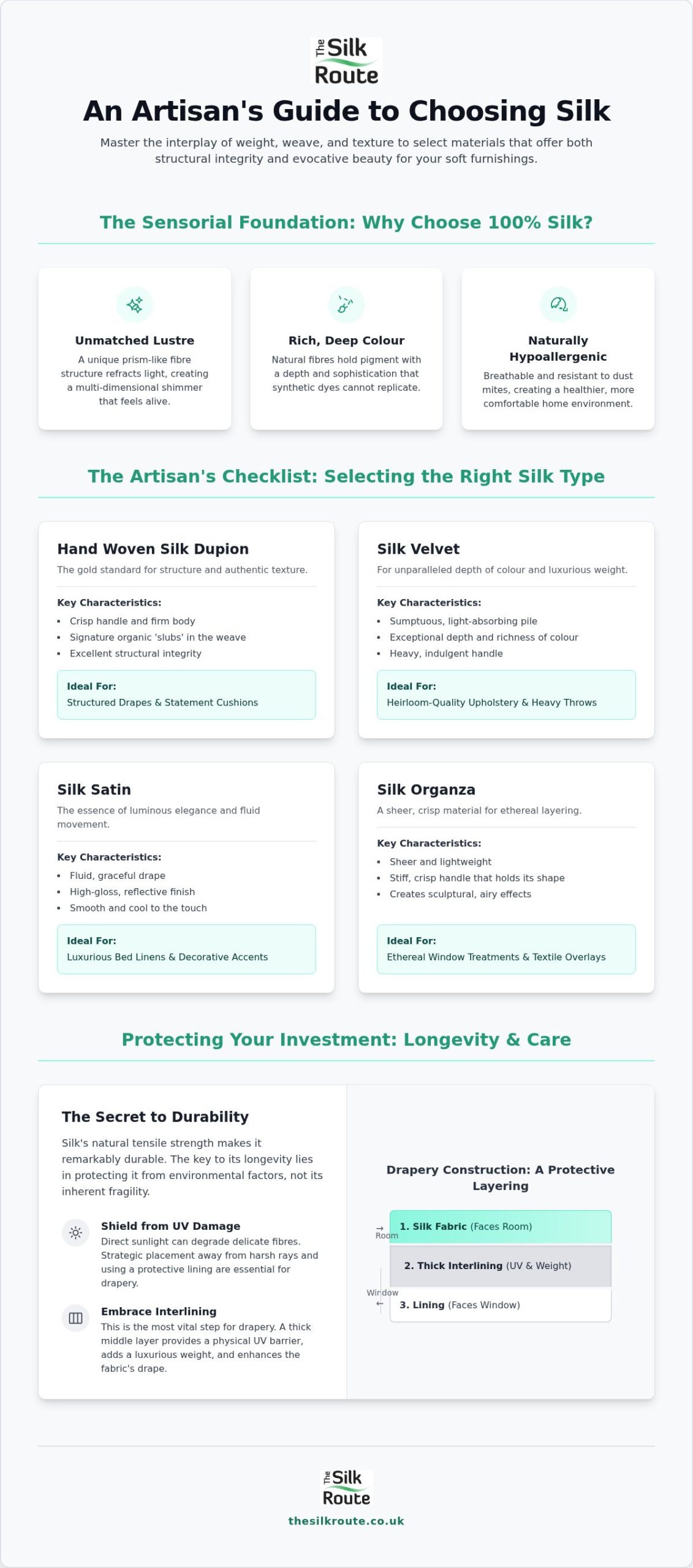
- Hand Woven Indian Silk Dupion: Known for its crisp handle and signature slubs, it’s the gold standard for structured drapes and statement cushions.
- Silk Velvet: This sumptuous, light-absorbing material provides an unparalleled depth of colour, making it the ultimate choice for heavy throws and bespoke upholstery.
- Silk Satin: With its fluid drape and high-gloss finish, it brings a luminous elegance to decorative accents and luxurious bed linens.
- Silk Organza: A sheer, stiff material perfect for ethereal window treatments or creating sculptural overlays on existing textiles.
Matching Silk to Your Project
When choosing for curtains, prioritise weight and the way light interacts with the fabric’s surface. A heavier weight ensures a graceful fall, whilst the natural irregularities in the weave create a captivating play of shadows. For cushions, focus on texture. You want a material that invites touch but retains its shape through daily use. For interior designers and creators looking to source premium fabrics in volume, suppliers such as trade80silks.co.uk offer dedicated selections of fine silk and natural textiles for bespoke soft furnishings.
Understanding Silk Weights and Weaves
The choice between hand-woven and power-woven finishes depends entirely on your desired aesthetic. Power-woven silk offers a uniform, smooth surface, yet many designers prefer hand woven silk dupion for its authentic, artisanal texture. This material brings a sense of history and human craft to a space that mass-produced fabrics cannot match. If you’re unsure which weight suits your vision, you might find inspiration amongst our hand-picked silk collections to help guide your creative journey.
Practical Considerations for Longevity and Care
The enduring beauty of silk fabric for soft furnishings often depends on the invisible elements of its construction. There’s a common misconception that silk is too delicate for a busy home; however, its natural tensile strength makes it remarkably durable when handled with expertise. The key to longevity lies in protection and preparation rather than fragility. Understanding how to care for silk fabric for soft furnishings ensures your investment remains a vibrant centrepiece for decades.
Interlining is the most vital step for any drapery project. By placing a thick, soft layer between the silk and the lining, you create a barrier against UV rays whilst adding that coveted, heavy “thud” to the drape. This structural bulk transforms a simple curtain into a statement piece that feels substantial. Professional cleaning is equally vital; choosing a specialist who understands natural fibres is an investment in the lifespan of your bespoke pieces.
Protecting Your Investment from Sun Damage
Sunlight is the primary cause of fibre degradation in natural textiles. For south-facing windows, always pair your silk with high-quality blackout linings to shield the delicate threads. If you’re designing for a sun-drenched room, consider using Silk Noil or Raw Silk. These varieties possess a more robust, matte texture that handles environmental stress differently than high-lustre satins.
Handling and Sewing Silk for Interiors
Achieving a professional finish requires precision. Use sharp, new needles and fine silk pins to avoid snagging the weave. Adjusting your machine’s tension is essential to prevent puckering, especially when working with heavier weights. Sourcing your materials from a specialist silk fabric supplier ensures you receive the expert guidance necessary to navigate these technical nuances.
Designing with Silk: From Cushions to Bespoke Drapery
Designing with silk fabric for soft furnishings is an evocative process that requires a balance of intuition and expertise. To maintain harmony across a room, consider using Silk Theme Packs. These curated selections allow you to organise colour and texture with confidence, ensuring that drapes, cushions, and throws speak the same visual language. Mixing textures is the secret to a high-end boutique aesthetic. Try layering the light-absorbing depth of Silk Velvet against the rugged, organic character of Raw Silk. This contrast creates a sophisticated sensory experience that feels both modern and timeless.
Curating a Sensory Room Palette
Light is silk’s most important partner. Always test swatches in your space to observe how the pigment shifts from the cool morning glow to the warmth of evening lamps. For window treatments that require a softer touch, Silk Organza provides a masterful way to diffuse harsh sunlight. It creates a layered, ethereal effect that preserves privacy whilst bathing the room in a gentle, atmospheric radiance. This nuanced approach to light management is what separates standard interiors from truly bespoke environments.
Adding Artisan Details with Saree Silk
True luxury lives in the details. You can add a unique artisan “signature” to your projects by incorporating Silk Saree Ribbon or Silk Saree Yarn into your designs. These reclaimed materials make exquisite upholstery piping, bespoke tassels, or delicate embroidery on cushion covers. Every strand tells a story of heritage and craft. If you’re struggling to find the perfect tonal match for your vision, we encourage you to contact a consultant. Personalised advice is often the bridge between a simple design and a creative masterpiece.
Elevate Your Space with Timeless Silk Artistry
Refining your home with 100% silk is more than an interior design choice; it’s an investment in a sensory legacy. You’ve discovered how the interplay of light and hand-woven texture creates an atmosphere that synthetic fibres simply cannot replicate. By mastering our artisan checklist, from selecting the right weight to protecting your investment with interlining, you’re now equipped to choose silk fabric for soft furnishings with absolute confidence. Whether you’re layering sumptuous silk velvet or adding bespoke saree ribbon trims, your creative vision is within reach.
As a specialist in Indian Silk Dupion, we’re dedicated to acting as your partner in this artistic journey. We provide expert guidance and national UK delivery. It’s our way of ensuring your experience is as seamless as the fabrics themselves. Don’t let technical confusion hold you back from the luxury you deserve.
Take your time to explore the possibilities and let your imagination breathe life into every room.
Frequently Asked Questions
Is silk fabric durable enough for curtains in a sunny room?
Silk is remarkably resilient, yet UV rays can compromise natural fibres over time. To ensure your silk fabric for soft furnishings lasts for decades in a sunny room, you must use high-quality interlining and a protective lining. These layers act as a shield, preventing sunlight from degrading the delicate threads whilst adding a luxurious, heavy drape to your window treatments. This preparation transforms silk into a practical, enduring choice.
What is the difference between Hand Woven and Power Woven Silk Dupion?
Hand Woven Indian Silk Dupion is defined by its unique, organic slubs and slight variations in texture that reflect the artisan’s touch. It offers a rhythmic, tactile depth that feels authentic and bespoke. Conversely, Power Woven Indian Silk Dupion provides a more uniform, consistent finish for projects requiring a smooth aesthetic. Both varieties offer the same 100% silk quality, but the hand-woven type is unrivalled for its character.
Do I need to line silk cushions and soft furnishings?
Lining is essential for silk fabric for soft furnishings to provide structural integrity and prevent seam slippage. Because silk filaments are fine, a cotton or calico lining helps the material hold its shape and protects it from internal wear. For cushions, this extra layer ensures the fabric doesn’t appear thin when stretched over a pad, resulting in a professional, boutique finish that handles the demands of daily life.
Can I use silk velvet for upholstery projects?
Silk Velvet is an exquisite choice for upholstery, specifically for statement pieces like occasional chairs, ottomans, or headboards. Its deep pile creates a multi-dimensional colour effect that shifts elegantly as you move through the room. It’s best suited for items that won’t face aggressive, daily abrasive wear. When using it for furniture, always consult a specialist to ensure the correct backing is used to preserve its sumptuous handle.
How do I calculate how much silk fabric I need for my curtains?
Start by measuring your track width and the total drop. Most silk curtains require a fullness of 2 to 2.5 times the track width to achieve that coveted, voluminous look. You must also account for hem allowances and any pattern repeats within the weave. If you’re managing a complex project, seeking personalised advice from a consultant can help you refine these calculations to ensure you order exactly what you need.