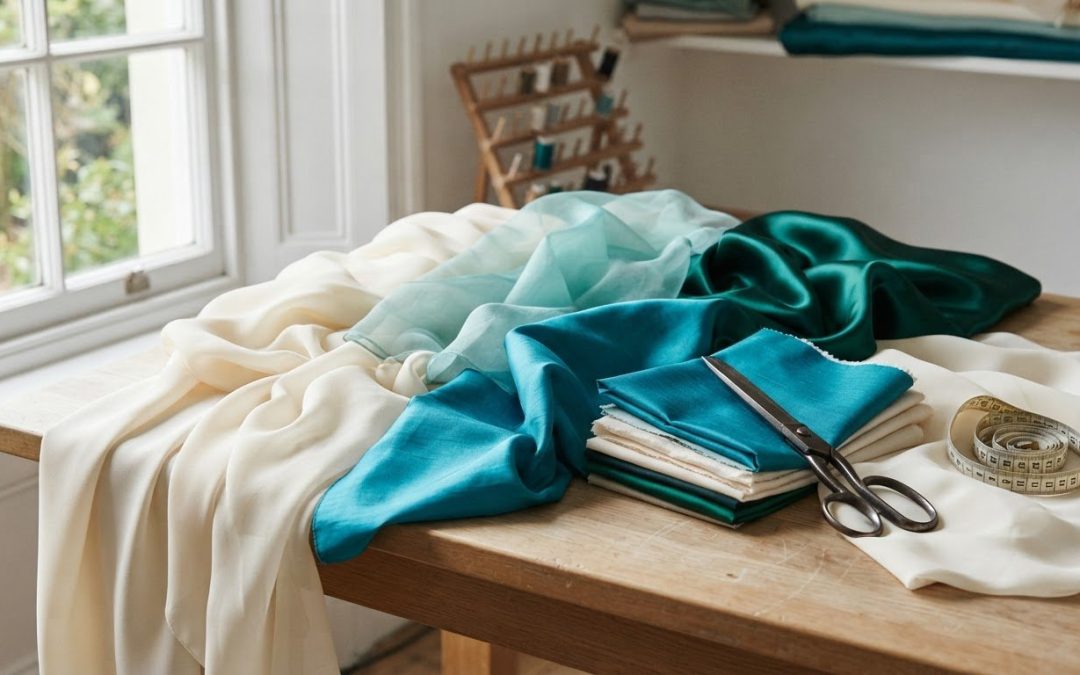
For dressmaking, silk chiffon and crepe de chine offer a light, fluid drape for flowing silhouettes, while dupion, organza, satin, velvet, habotai, noil and raw silk bring different textures and character to a garment. To buy silk fabric online in the UK with confidence, match the fabric’s drape and finish to your design, then look closely at its width and fibre composition. These choices influence how your finished piece looks and feels.
Silk’s sheen can catch your eye, but the right fabric depends on the garment you plan to make. A softly draping blouse calls for a different texture and structure from a crisp skirt or evening dress. This guide explains how to compare silk fabrics, prices and cuts, and what to check in product details before ordering. You’ll be better prepared to choose a fabric and quantity that suit your project.
Key Takeaways
- Match silk’s drape, texture and finish to the shape of your garment, from fluid designs to more structured pieces.
- Compare fabric prices and discount terms carefully, paying attention to how much cloth each listed price covers.
- Use width and fibre-composition details to judge fabric requirements and distinguish pure silk from blended or synthetic options.
- Explore silk sold by the metre for more flexibility in planning your project, including The Silk Route’s Indian Silk Dupion and silk packs.
What types of silk fabric are available for dressmaking?
Online, UK dressmakers can choose silk chiffon, crepe de chine, dupion, organza, satin, velvet, habotai, noil and raw silk. Each weave and finish changes the cloth’s movement and surface: chiffon and crepe de chine drape fluidly, while satin has a smooth sheen and velvet a soft pile.
For flowing blouses or overlays, compare chiffon and crepe de chine; for a more defined silhouette, consider dupion or organza. Silk patterns may be printed or woven into the cloth, whilst dupion’s irregular texture brings visual interest without a printed motif. Match the scale of an intricate pattern to the garment’s seams and panels so its detail remains visible.
- Light and fluid: chiffon and crepe de chine suit garments that move softly.
- Smooth or lustrous: satin brings a polished finish to evening projects.
- Textural: dupion, velvet and noil offer distinct surfaces and visual depth.
- Sheer and crisp: organza adds structure to overlays and layered details.
A single silkworm cocoon can yield 600 to 900 metres of silk filament. The finished fabric’s weave, weight and surface determine whether that natural fibre feels airy, smooth, crisp or plush against the skin. For neat seams in silk chiffon, use bound or French seams because the fabric frays easily. Before cutting, follow care guidance for the particular cloth; pre-washing or dry cleaning is recommended for most silk types.
The delivery option determines the stated arrival timeframe, so compare it with your project schedule.
If you’re unsure which silk to choose, Natural Silk Packs and Silk Theme Packs offer ways to explore different fabrics. The Silk Route also offers small pieces and fat quarters, so you can see and feel a fabric before ordering more.
Return policies also vary by retailer and fabric order. Read the terms before purchasing, particularly any conditions covering cut lengths, fabric condition and the process for returning an order.
Silk fabric prices and discounts
Compare prices using the same unit. A listing may show a price per metre, half metre or piece, and the size of each cut matters. Check the stated dimensions and quantity options for the exact fabric you want, then calculate the amount needed for your pattern. This makes it easier to compare like with like and plan your order.
Price is shaped by more than the word “silk”. Weave, finish, weight and fibre composition all influence the cloth and its intended use. Lightweight silk chiffon, for example, serves different fashion projects from a heavier fabric intended for upholstery. Compare similar fabric types and finishes, rather than treating every silk in a collection as interchangeable.
- Per metre: multiply the listed unit price by the length required for your pattern.
- Per half metre: check whether the quantity selector allows the increments your project needs.
- Per piece: read the stated piece size before comparing it with length-based listings.
A starting price marked “excluding VAT” is not the full amount payable. Look for the VAT treatment, delivery charge and any other stated costs in the order summary. For overseas orders to the UK, the product price alone doesn’t establish whether VAT or import charges are included. Use the checkout’s tax and delivery breakdown to understand the total before placing an order.
Discounts can make a listed price look more attractive, but compare the discounted unit price with the fabric’s full price and required length. Check whether a reduction applies to the colour and quantity you want, and whether the displayed figure is per metre, half metre or piece. A lower unit price won’t help if the cut doesn’t suit your pattern.
To compare confidently, note the fabric name, unit, finish and total required for each option. You can also explore the silk fabric selection when considering materials for your next project.
Fabric widths and fibre composition
Before choosing fabric for a dress, check its width, fibre content and stated weight. These details help you compare options and plan how the pattern pieces will fit.
To assess silk online, read the composition and construction details alongside the stated width and weight. A clear product description gives you practical information to compare options.
Fabric Widths
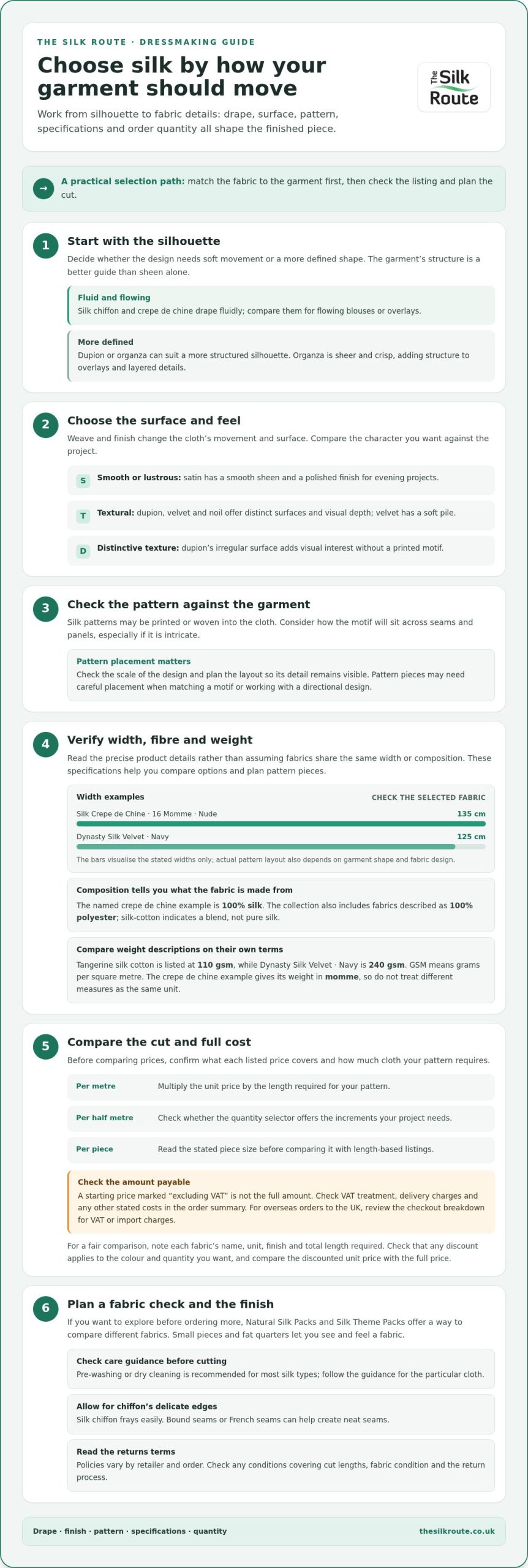
Width affects pattern layout and how much fabric a project needs. Silk Crepe de Chine – 16 Momme – Nude is 135 cm wide, whilst Dynasty Silk Velvet – Navy measures 125 cm. These examples show why you shouldn’t assume every fabric uses the same width. Compare the listed measurement with your pattern pieces, including any planned placement for vibrant prints.
Fabric width affects how pattern pieces can be arranged, but the garment shape and pattern layout matter too. Check the stated width for the precise fabric you’ve selected, then plan the cutting layout around its usable area. Pattern pieces may need careful placement, particularly when matching a motif or working with a directional design.
Fibre Composition
Read the fibre-composition label rather than relying on a fabric’s name or lustrous appearance. Silk Crepe de Chine – 16 Momme – Nude is made from 100% silk. The silk collection also includes fabrics described as 100% polyester, so composition distinguishes natural silk from synthetic material. A silk-cotton fabric signals a blend, not pure silk.
Use the stated fibre content to compare fabrics, then consider their weave and finish. For example, Ivory Silk Chiffon is soft, sheer and lightweight. These details help you judge whether a fabric suits the garment and the look you want.
Fabric Weights and Momme
Weight descriptions use different measures. Tangerine silk cotton fabric weighs 110 gsm, while Dynasty Silk Velvet – Navy weighs 240 gsm. GSM means grams per square metre; it helps compare the weight of fabrics using that measure. Silk Crepe de Chine – 16 Momme – Nude gives its weight in momme instead, so compare like with like.
Momme and GSM are distinct labels, not interchangeable numbers. For online quality checks, look for the stated weight, weave and finish, then compare close-up images for visible texture and consistency. Chiffon, crepe de chine and velvet have different surfaces, so assess each against the effect your project needs.
Pure silk fabric by the metre
Buying pure silk by the metre lets you plan a cut around a specific garment, rather than choosing a pre-sized piece. Start with your pattern’s fabric requirements, then allow for its layout, seam allowances and any matching of motifs. For a flowing dress, the grain and drape matter as much as the length you order.
Check the fibre description carefully: “100% silk” identifies pure silk, while a listing that names polyester or cotton describes a different composition. Fabric names alone don’t establish fibre content. For instance, a smooth, lustrous surface may suggest one finish, but the product details tell you whether the material is pure silk or a blend.
- For dresses: compare the fabric’s drape and surface with your pattern’s shape and intended finish.
- For bridal projects: consider how the chosen colour, texture and sheen work together under the lighting of the event.
- For home decor: assess the fabric’s weight and intended use alongside its appearance.
Pure silk brings a distinctive texture to dressmaking, from softly fluid cloth to crisp or lustrous finishes. Silk chiffon, for example, creates a light effect, while silk satin offers a smoother, more reflective surface. The right choice depends on the garment’s structure and the finish you want, not simply on the fibre name.
Before ordering, compare the stated fibre composition, width and finish with your pattern requirements. If your design includes a prominent print, consider where its motifs will fall across the bodice, sleeves and skirt. With plain fabric, colour and sheen shape the finished look. These checks help you choose a suitable fabric and cut.
The Silk Route: Hand Woven Indian Silk Dupion
The Silk Route supplies silk fabrics for dressmakers and other makers. If Indian silk dupion is on your shortlist, compare Hand Woven Indian Silk Dupion, which has a more textured surface, with Power Woven Indian Silk Dupion, which is less textured. Check the product details to choose the finish that suits your design.
If you’re still developing a project or choosing colours, Natural Silk Packs and Silk Theme Packs offer a way to explore silk fabrics. Once you have a clearer idea of the material you want, compare the details on individual fabric listings. You can also ask The Silk Route for guidance on suitable fabrics and colours for your project.
Visit thesilkroute.co.uk to explore the silk fabrics and packs.
Let your next silk project take shape
Choosing silk makes your design feel closer to reality: consider how its colour and texture will work in the garment. If you’re ready to buy silk fabric online in the UK, start with your pattern requirements, then select a fabric and cut that suit your project.
The Silk Route supplies Hand Woven Indian Silk Dupion and Power Woven Indian Silk Dupion, as well as Natural Silk Packs and Silk Theme Packs. Browse the fabric details to compare textures, colours and available cuts. If you’d like help choosing, describe your project and The Silk Route can recommend suitable fabrics and colours.
Choose a silk whose colour, texture and finish bring your design to life.
Frequently Asked Questions
How much does silk fabric cost per metre in the UK?
Prices depend on the specific fabric and cut, not on a universal rate for silk. If you buy silk fabric online in the UK, check the product listing for the available sizes and prices, then review the delivery charge shown at checkout to understand your order total.
How can I tell whether online silk fabric is genuine silk or a blend?
Read the fibre-composition details rather than relying on a product name, sheen or photograph. The Silk Route states that its fabrics are 100% silk. When buying silk fabric online in the UK, use the stated composition as your guide; small pieces and fat quarters let you inspect the surface and feel before choosing a larger cut. A tactile check complements, but doesn’t replace, the composition details.
What silk fabric is best for dresses, shirts, upholstery or crafts?
Choose according to the garment’s shape and the finish you want: silk satin suits a lustrous look, while dupion offers a more textured surface. For shirts, consider the desired opacity and whether the design needs lining. Upholstery calls for particular attention to intended use and care. For smaller creative projects, Silk Theme Packs, silk saree yarn and silk saree ribbon offer varied materials to work with.
Are there UK import duties or VAT when ordering silk fabric from overseas?
For overseas orders to the UK, the product price alone doesn’t show whether VAT or import charges are included. Check the checkout’s tax and delivery breakdown before ordering.