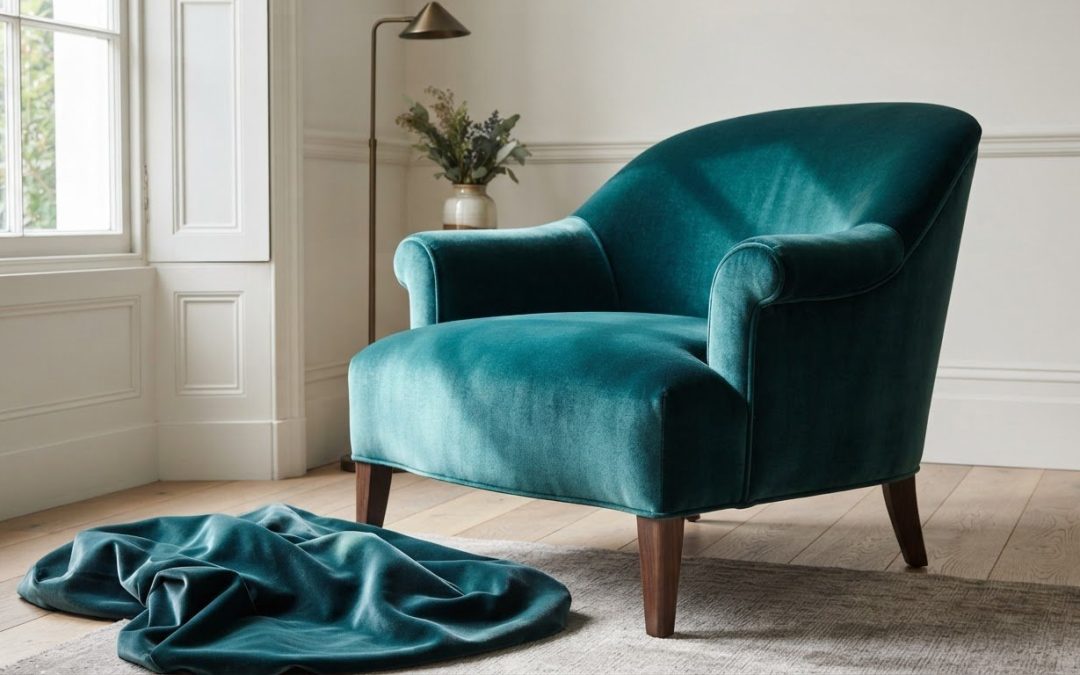
Velvet comes in silk, cotton, crushed, linen-blend and modern polyester varieties, each with a different mix of sheen, pile and practical qualities. Silk velvet for upholstery has a particularly lustrous, shifting surface, but whether it suits a piece depends on how often it will be used, its wear resistance and care needs. Its colour can also change noticeably as daylight and room lighting move across the pile.
It’s easy to see why velvet draws the eye: its dense, soft surface adds depth and a sense of occasion to a room. But the most sumptuous-looking option isn’t automatically the best choice for a frequently used sofa or chair.
This guide explains how velvet types differ, where silk velvet can work in upholstery, and what to weigh when considering durability and care. It also looks at why a shade may appear richer, lighter or more subdued in different lighting, helping you choose with the room and the fabric’s character in mind.
Key Takeaways
- Compare velvet by its fibre, pile and sheen: cotton, silk, viscose and linen blends each bring a different look and feel.
- For upholstery, consider the fabric’s wear resistance and pile length, as well as how the furniture will be used.
- View velvet in the room where it will be used; changing light and the direction of the pile can alter how its colour appears.
- Explore The Silk Route’s Hand Woven Indian Silk Dupion when choosing silk fabric for a considered furnishing project.
What are the different types of velvet fabrics?
Velvet’s plush surface comes from cut threads that form a short, dense pile. In silk velvet, two warps and one weft create the pile, while silk gives the fabric a pronounced sheen and shimmer. The nap, or pile direction, explains why brushing the surface one way can make its colour look different from brushing it the other way. Rayon, also called viscose, is often blended with silk in velvet, so check the fibre content when comparing fabrics.
Cotton velvet has a shorter pile and softer sheen than silk velvet. Traditional cotton velvet is also described as more durable, making it a practical option for frequently used furniture. Linen can stiffen velvet’s weft, helping the fabric perform more robustly in upholstery. Crushed velvet has a different appearance because its pile runs in several directions, reducing its susceptibility to pressure marks from repeated compression in one place.
The cost of reupholstering a sofa in silk velvet in the UK depends on its size, the amount of fabric needed, labour and any extra work to the frame or cushions. Fabric is only one part of the overall project cost.
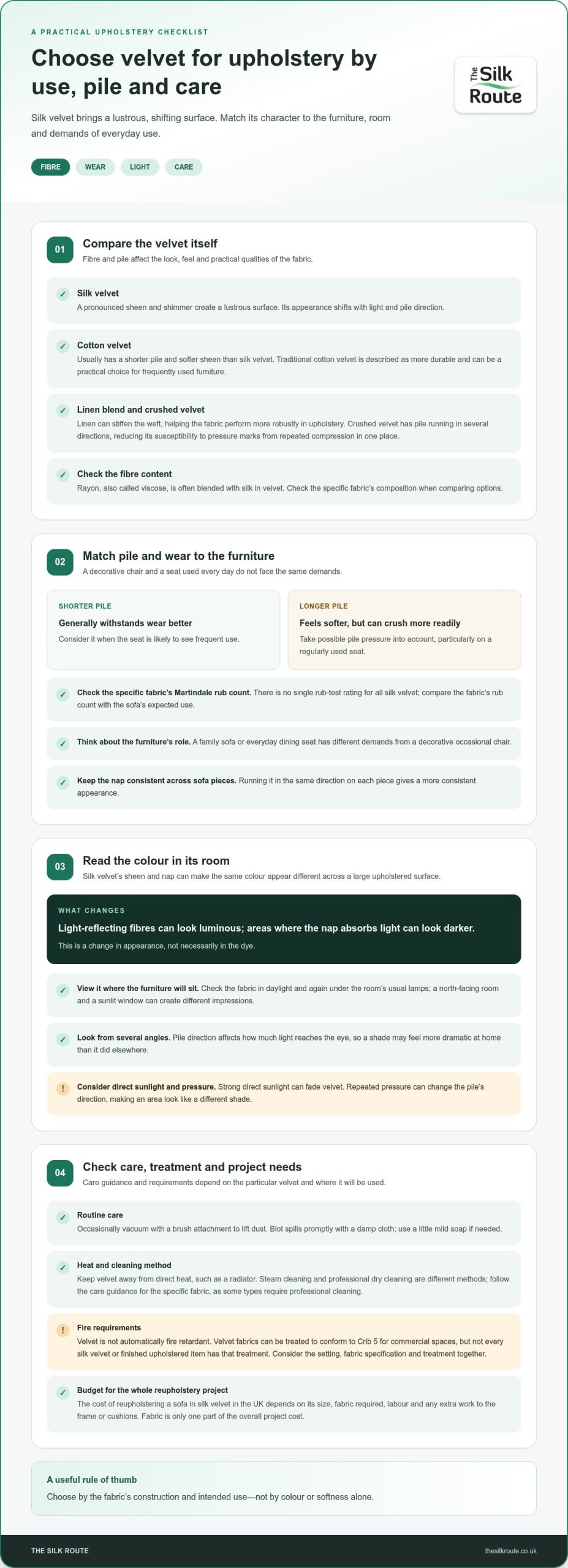
Durability varies with velvet construction and pile, so there is no single Martindale rub-test rating for all silk velvet upholstery fabrics. Compare the specific fabric’s rub count with the sofa’s expected use. Shorter piles generally withstand wear better, while longer piles feel softer but can crush more readily.
For maintenance, occasionally vacuum upholstery velvet with a brush attachment to lift dust, and blot spills promptly with a damp cloth. Use a little mild soap if needed. Keep the fabric away from direct heat, such as a radiator. Steam cleaning and professional dry cleaning are different methods, so follow the care guidance for the specific velvet, as some types require professional cleaning.
There isn’t one backing or treatment that suits every silk velvet available from The Silk Route. The choice depends on the fabric’s construction and intended use; for commercial spaces, velvet fabrics can be treated to conform to Crib 5.
Velvet for furnishing and upholstery
For furniture, velvet’s dense pile brings softness and visual depth, but suitability depends on use. Consider the seat’s wear, pile behaviour and fire requirements together.
Upholstery and Everyday Suitability
Velvet’s dense tufts can suit heavy domestic use, but that general quality doesn’t make every silk velvet equally hard-wearing. For a frequently used seat, check the fabric’s Martindale rub count and pile length: shorter piles tend to be more durable, while longer ones feel softer and can crush more readily. Judge silk velvet by its specific construction and intended setting.
Furniture Applications
On a sofa, silk velvet can give a broad surface a rich sheen; on dining chairs, it adds tactile softness to a smaller area. For high-traffic furniture, weigh expected use against the fabric’s wear rating and the possibility of pile pressure. If velvet covers several sofa pieces, keep the nap running in the same direction on each for a more consistent appearance.
That distinction matters: a decorative occasional chair faces different demands from a family sofa or a dining seat used every day. Match the fabric’s rub count and pile to the furniture’s role, rather than choosing by colour or softness alone. A longer pile may feel more sumptuous, but it can show pressure more readily.
Fire Retardancy and UK Compliance
Silk velvet isn’t automatically fire retardant simply because it is velvet. Velvet fabrics can be treated to conform to Crib 5 for commercial spaces, but that does not mean every silk velvet or finished upholstered item has that treatment. For a commercial setting, the relevant consideration is whether the chosen fabric and treatment meet the project’s requirements.
For domestic furniture, don’t assume that a fabric’s fibre or finish establishes compliance for the whole item. Consider upholstery materials and their treatments in context, including where the furniture will be used. The intended setting, fabric specification and treatment all shape the decision.
For a furnishing project centred on silk, explore silk velvet fabric as a material option, then compare its pile and intended use with the demands of each piece.
Colour depth and light variation
Silk velvet’s sheen makes colour shift as light meets its pile. A deep blue can look luminous where the fibres reflect light, then darker where the nap absorbs it. This is a change in appearance, not necessarily in the dye. The effect is especially noticeable across a large upholstered surface, such as a sofa back or seat.
Assess the colour where the furniture will sit. View the fabric in daylight, then again under the room’s usual lamps: a north-facing room and a sunlit window create different impressions. Look at the material from several angles, since pile direction affects how much light reaches the eye. A shade that seems balanced in one setting may feel more dramatic at home.
Strong direct sunlight can fade velvet, so consider where a chair or sofa will sit in relation to bright windows. In a well-lit room, colour retention is an important quality to consider. Curtains, blinds or moving the furniture away from direct sun can reduce prolonged exposure. Treat sunlight as one of the room’s design conditions, not just a backdrop.
Silk velvet can also show marks where its pile is repeatedly pressed down. A seat used in the same spot each day may develop a patch that looks different, even without a spill. This pressure changes the shade visually. Brush the surface gently in different directions to see how it responds, and consider whether shifting marks will suit the room’s lived-in character.
Does silk velvet fade in sunlight or mark easily? Strong direct sunlight can fade velvet, while regular pressure can change the pile’s direction and make an area appear to be a different shade. Before choosing a colour, view it in place and consider both window exposure and daily use. This gives you a clearer sense of how its lustre may look over time.
Is silk velvet suitable for upholstery and everyday use?
Silk velvet can suit upholstery when a design calls for lustre, softness and a richly shifting surface. Its suitability for everyday furniture depends on use, pile and care, not appearance alone. Dense velvet tufts can suit heavy domestic use, but silk velvet is less durable than traditional cotton velvet. That difference matters on a family sofa used throughout the day.
For a rarely used armchair, tactile luxury may matter more than maximum wear resistance. When curating an elegant interior with statement pieces from high-end design specialists such as Benjamin & Maxwell, visual impact often takes centre stage. Conversely, a busy sofa or dining chair faces more repeated pressure, so compare the fabric’s Martindale rub count and pile length with its intended role. Shorter piles generally withstand wear better; longer piles feel softer but may crush more readily. Consider who uses the furniture and where they sit.
Care is part of the decision. Occasionally vacuum velvet with a brush attachment to remove dust, and blot spills promptly with a damp cloth. Use a little mild soap if needed. Keep the upholstery away from direct heat, such as a radiator, and avoid ironing, which can crush the pile and leave a lasting imprint. Some velvet types require professional cleaning, so consider whether their care needs suit your household.
Silk velvet for upholstery is a considered choice for rooms where its sheen and texture can be appreciated and regular care is practical. Before choosing it, weigh daily use, sunlight exposure, the likelihood of spills and your tolerance for visible pile pressure. A decorative chair in a quieter room has different demands from a dining chair used at every meal. Match the fabric to the furniture, not just the colour scheme.
Silk velvet is less durable than traditional cotton velvet, so its suitability depends on how heavily the furniture will be used. Compare the specific fabric’s Martindale rub count with its intended role.
The Silk Route: Hand Woven Indian Silk Dupion
The Silk Route offers Hand Woven Indian Silk Dupion for projects where woven silk can complement a considered interior scheme. If you’re exploring materials alongside velvet, compare how each fabric’s texture and colour contributes to the room, while choosing upholstery fabric to suit the furniture’s practical demands.
For creative sampling and colour exploration, Natural Silk Packs and Silk Theme Packs offer different ways to bring silk fabrics together. Power Woven Indian Silk Dupion is another woven silk option to consider as you develop a palette or plan fabric details beyond the upholstered piece.
Visit thesilkroute.co.uk to explore the silk fabrics, or contact The Silk Route to discuss your project.
Shape your next furnishing decision
Let the room guide your final choice. Before settling on silk velvet for upholstery, picture the finished piece in its setting: how it will be used, the light it will meet and the atmosphere you want it to create. A clear design brief brings the practical and aesthetic decisions together.
If you’re developing a wider palette, The Silk Route offers Hand Woven Indian Silk Dupion, Power Woven Indian Silk Dupion and Natural Silk Packs. These silk options can help you explore texture and colour beyond the upholstered feature and bring a considered thread to your interior scheme.
Take the next step at your own pace, keeping the room and its materials in mind.
May your chosen fabric bring warmth, character and lasting pleasure to your space.
Frequently Asked Questions
What is Silk Velvet Made of?
Silk velvet has silk fibres in its pile, though fabrics sold as silk velvet may blend silk with rayon, also called viscose. Check the label’s fibre content to distinguish pure silk from a blend. Its construction uses two warps and one weft to create the raised pile that gives velvet its distinctive feel. For a cushion or decorative panel, check both the pile fibre and backing composition.
What is the right choice of velvet for me?
Choose according to the furniture’s use, the finish you prefer and the care you’re comfortable with. Silk’s lustre may suit a formal occasional chair; for a heavily used family seat, compare durability and maintenance before deciding. A fabric sample can help you assess its feel, colour and pile in your own space. Consider sunlight and regular pressure, too.
How does silk velvet compare with cotton, polyester and viscose velvet for upholstery?
Silk velvet is known for its pronounced sheen, while cotton velvet usually has a softer lustre and is described as more durable. Polyester velvet can closely imitate silk’s appearance and is described as more durable and stain resistant. Viscose is often blended with silk in velvet, so the proportion affects the fabric’s character. Compare fibre content and the specific upholstery fabric’s wear rating rather than relying on its name alone.
What are the durability and Martindale rub-test ratings of silk velvet upholstery fabric?
There is no single Martindale rating for all silk velvet upholstery fabrics. Compare the specific fabric’s rub count with its intended use. Silk velvet is less durable than traditional cotton velvet, and shorter piles generally withstand wear better.
What upholstery backing or treatment does silk velvet need?
There is no one backing or treatment that suits every silk velvet; it depends on the fabric’s construction and intended use. For commercial spaces, velvet can be treated to conform to Crib 5.