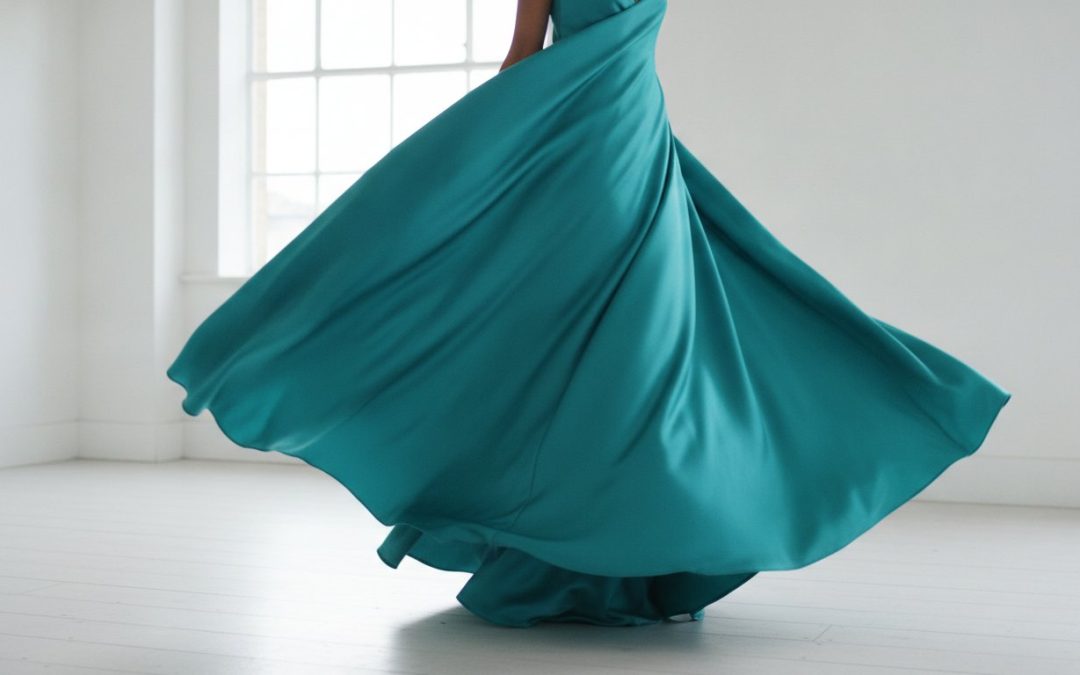
A truly spectacular dress is never static; it lives and breathes through the rhythmic undulation of its fabric as you move. You’ve likely felt that specific disappointment when a beautiful design falls flat because the material is too rigid or lacks a certain liquid quality. Choosing the best fabric for flowing dress projects is often a delicate dance between technical specifications and tactile intuition. It’s easy to feel overwhelmed by the subtle differences in silk weights or to worry that a chosen cloth might lack the graceful movement your vision demands.
We’re here to help you demystify the ethereal world of silk weaves, ensuring you select the perfect weight and texture for garments that move with effortless poise. You’ll gain the confidence to distinguish between the lustrous glide of Satin, the airy whisper of Habotai, and the tactile, matte charm of Noil. This guide provides a clear path to understanding drape and flow, whilst connecting you with a reliable UK source for artisan silk. Let’s begin the journey of transforming your creative sketches into garments that possess a life of their own.
Key Takeaways
- Master the nuances of drape and ‘hand’ to predict how a fabric will cascade over the body before you even begin cutting.
- Compare the liquid-like lustre of Silk Satin with the airy glow of Habotai to identify the best fabric for flowing dress designs that suit your specific aesthetic.
- Discover why Silk Noil is an inspired choice for silhouettes that require both structure and fluidity, adding a sophisticated matte texture to your work.
- Learn how to match fabric weight to garment length, ensuring your maxi dresses retain their shape without losing that essential, ethereal movement.
- Acquire the expertise needed to source authentic 100% silk in the UK and handle these fluid materials with professional confidence.
Understanding Drape: What Makes a Fabric ‘Flow’?
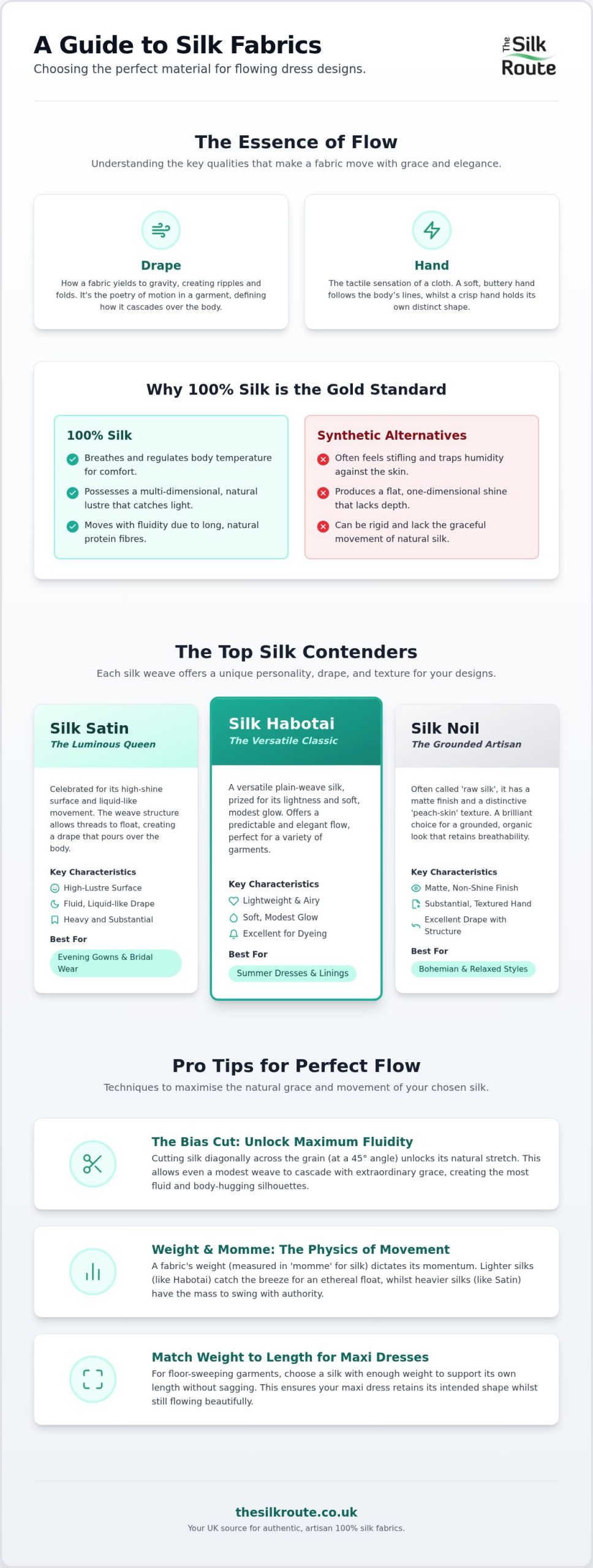
Drape is the poetry of motion. It describes how a material yields to gravity and the contours of the body, creating those evocative ripples we associate with high-end dressmaking. When we talk about Understanding Drape, we are examining the fabric’s willingness to sway and subside. Closely linked to this is the ‘hand’ of the cloth, which is the tactile, sensory experience of its texture. A fabric with a soft, buttery hand will naturally follow the body’s lines, whilst a crisp hand indicates a material that prefers to hold its own shape.
For those seeking the best fabric for flowing dress projects, 100% silk remains the undisputed gold standard. This preference isn’t merely about luxury; it’s about the unique structure of long, natural protein fibres. These fibres allow for a seamless transition between stillness and movement. You might choose Silk Satin for a fluid, liquid-like drape that clings and flows, or perhaps Silk Organza for a more sculptural effect. Organza possesses a distinct ‘memory’, allowing it to create volume and ethereal shapes that stay suspended in the air.
The Physics of Fluidity: Weight and Weave
The momentum of a skirt is dictated largely by its weight, measured in silk as ‘momme’. A light Habotai might catch a stray breeze, whereas a heavier silk has the physical mass to swing with authority as you walk. Beyond weight, the secret to maximum fluidity often lies in the bias cut. By cutting the silk diagonally across the grain, you unlock its natural stretch, allowing even a modest weave to cascade with extraordinary grace.
Why Synthetic Alternatives Often Fall Short
Natural silk regulates temperature, keeping the wearer comfortable, whilst polyester often feels stifling and humid. The natural lustre of silk creates a multi-dimensional glow that accentuates the ‘flow’ of the garment by catching light on every moving fold. This is a quality that flat, synthetic shines rarely achieve. When you choose silk, you aren’t just buying a fabric; you are investing in a material that responds to the light and the air around it.
The Top Silk Contenders: Satin vs. Habotai vs. Noil
Choosing the right cloth for your project is akin to selecting a partner for a dance. Each weave brings a distinct personality to the floor, and understanding these nuances is essential when searching for the best fabric for flowing dress designs. Finding the best fabric for flowing dress silhouettes often leads designers back to these three core weaves, each offering a different response to light and movement. As noted in Encyclopaedia Britannica’s history of silk, the material’s unique properties have made it the ultimate choice for elegant drapery for millennia.
Silk Satin: Luminous Elegance
Silk Satin is the undisputed queen of evening wear, celebrated for its high-shine surface and liquid-like movement. The weave structure allows the threads to float over one another, resulting in a drape that doesn’t just hang, but pours over the body. For those crafting high-end gowns, sourcing premium silk satin fabric is the first step toward a professional finish. Silk Satin is the premier choice for bridal slip dresses because its heavy drape and lustrous surface create a flawless, body-skimming silhouette.
Silk Habotai: The Artist’s Favourite
If Satin is the dramatic lead, Silk Habotai is the versatile classic. Originally used for kimonos, this plain-weave silk is prized for its lightness and soft, modest glow. It offers a predictable and elegant flow, making it ideal for summer dresses or as a luxurious lining that feels cool against the skin. Because it takes dye beautifully, it remains a favourite for those creating bespoke, hand-painted garments that require a delicate, airy presence.
For a more contemporary, relaxed aesthetic, Silk Noil offers a surprising alternative. Often called ‘raw silk’, it features a matte finish and a distinctive ‘peach-skin’ texture that feels wonderfully substantial. It’s a brilliant choice for bohemian, flowing dresses that require a more grounded, organic look whilst still maintaining the breathability and movement of 100% silk. If you feel inspired to start your next project, you can explore our artisan collection to find your perfect match.
Matching Fabric to Silhouette: Which Silk for Your Design?
A silhouette is the blueprint of your vision, but the silk you choose is undoubtedly its soul. When you’re crafting a floor-sweeping maxi dress, the physical weight of the cloth becomes a critical consideration. You need the best fabric for flowing dress patterns that won’t sag or lose their intended shape under the significant pull of their own length. Whilst a light Habotai offers a dreamlike, airy quality, a slightly heavier Satin provides the necessary momentum for a dramatic, sweeping walk.
Tea dresses present a different creative challenge, requiring a delicate balance between a playful ‘swish’ and enough body to hold a defined vintage shape. If your design leans towards a more architectural or structured flow, consider the unique properties of hand woven silk dupion. Its inherent crispness allows for a sculptural movement that softer, more liquid weaves simply cannot replicate. How do you ensure a gown possesses both depth and ethereal lightness? Bridal gowns often achieve this magic through the sophisticated art of layering.
The Secret of Layering for Movement
Silk Organza serves as an invisible hero in many flowing designs, providing a hidden framework that supports softer overlays. This prevents delicate silks from clinging uncomfortably to the body, allowing them to float independently. By combining different silk weights, you can create a bespoke ‘flow’ that feels substantial yet remains effortlessly graceful in motion.
Choosing Colour and Texture
Colour influences more than just the visual aesthetic; it subtly alters the perceived weight of a garment. Darker, saturated tones often appear more grounded and ‘heavy’, whilst pale, iridescent shades enhance a sense of weightless agility. The unique charm of hand-woven artisan silk lies in its subtle variations, which catch the light in unpredictable ways. These tiny imperfections add a layer of sensory depth that power-loomed fabrics often lack.
Sourcing and Caring for Your Artisan Silk
The journey from a creative sketch to a finished garment is paved with tactile choices. When you search for the best fabric for flowing dress designs, the integrity of the fibre is just as important as the weave itself. Sourcing from a specialist UK supplier guarantees you are working with 100% silk purity, ensuring your dress behaves exactly as nature intended. Synthetic blends often lack the breathability and authentic weight required for truly graceful movement.
Handling these fluid materials requires a deliberate and thoughtful approach. Use exceptionally fine pins to secure your patterns, as standard dressmaking pins can leave visible scars in delicate Satin or Habotai. Sharp shears are equally vital; a dull blade will drag the silk, creating snags that disrupt the visual flow of the cloth. Before you begin cutting, consider the shrinkage profile of your chosen silk. Steaming your fabric beforehand is a wise precaution, as certain weaves can contract slightly when first exposed to moisture or heat.
The Silk Route’s Bespoke Service
We pride ourselves on being more than just a retailer; we are partners in your creative process. Our expert consultants are always available to help you navigate the nuances of momme weight and texture for your specific pattern. If you’re still exploring your aesthetic, our Silk Theme Packs offer a wonderful way to experiment with different textures before committing to a full length of the best fabric for flowing dress projects. For further inspiration on contemporary styles, you can learn more about Izzza and their range of formal and casual women’s clothing.
Sustainable and Ethical Sourcing
Choosing silk is an investment in longevity and ecological responsibility. As a natural, biodegradable fibre, silk offers a sustainable alternative to the plastic-based synthetics that dominate modern fashion. For those who appreciate the heritage of premium natural materials in all aspects of life, you can learn more about King of Cotton and the sourcing of their high-quality cotton fibres. By selecting our Hand Woven Indian Silk Dupion, you aren’t just buying cloth; you are supporting the centuries-old traditions of artisan weavers. Preserving your finished piece is simple: store it away from direct sunlight in a breathable garment bag to maintain its lustrous glow and natural drape for decades to come.
Bring Your Creative Vision to Life
The journey from a simple sketch to a cascading gown is one of sensory discovery and technical precision. You now understand how the marriage of fibre and weave creates that elusive, liquid movement. Finding the best fabric for flowing dress silhouettes is the foundation of every successful design. It allows your vision to move with effortless poise, ensuring your work is as breathtaking in motion as it is in repose.
Our team provides expert guidance to help you choose from an unrivalled range of hand-woven Indian silks. We offer the exceptional quality trusted by the bridal industry to ensure your bespoke projects are supported by the finest materials available in the UK. This commitment to excellence ensures your creations possess a rarity and depth that only 100% silk can provide.
Your next masterpiece is waiting within the threads of a perfectly chosen weave. Take your time to explore the possibilities and let your imagination breathe life into every fold.
Frequently Asked Questions
What is the best weight of silk for a summer dress?
A weight between 8 and 12 momme is ideal for a summer dress because it offers exceptional breathability without being overly transparent. Silk Habotai at 8mm is an exquisite choice for an airy, weightless feel, whilst a 12mm Silk Satin provides a slightly more opaque finish with a gentle, cooling touch against the skin. These weights ensure your garment remains light and comfortable during the warmer British months.
Is silk habotai or silk satin better for a flowing skirt?
Silk Satin is often considered the best fabric for flowing dress skirts requiring a liquid, heavy movement that catches the light with every step. If your goal is a dreamlike, ethereal quality that floats with the slightest breeze, Silk Habotai is the superior option. Satin pours over the body with a lustrous sheen, whereas Habotai offers a softer, more understated glow that feels wonderfully modest.
Can I use silk noil for a dress that needs a soft drape?
You can certainly use Silk Noil for a dress requiring a soft, matte drape. Whilst it lacks the high-shine finish of Satin, its unique ‘peach-skin’ texture provides a lovely weight that falls gracefully over the form. It’s particularly well-suited for bohemian silhouettes or relaxed daywear that needs to feel substantial yet remains fluid enough to move with the body.
How do I calculate how much silk fabric I need for a bias-cut dress?
You should typically allow for 1.5 to 2 times the length of fabric required for a standard straight-grain garment when cutting on the bias. Because the pattern pieces are laid at a 45-degree angle, they occupy significantly more width and length on the fabric roll. It’s always prudent to create a paper layout first to avoid underestimating your requirements for these sophisticated, fluid designs.
Is silk organza too stiff for a flowing dress design?
Silk Organza is too crisp to be used as the primary layer for a flowing dress, but it is an essential tool for providing invisible support. When used as an underlining or a hidden support layer, it allows lighter silks to float away from the body rather than clinging. This creates a more dramatic and professional ‘flow’ in the finished garment by maintaining the intended silhouette.