Have you ever spent weeks meticulously placing every stitch, only to find your masterpiece puckering or losing its grace the moment it leaves the hoop? It’s a quiet heartbreak known to many textile artists; the visible beauty of your work is often betrayed by an invisible foundation that cannot honour the weight of your creative vision. You likely understand that a project is only as resilient as the fabric beneath it, yet synthetic backings often feel scratchy, stiff, or entirely disconnected from the soul of your silk threads.
Finding the best silk for embroidery backing is about more than just preventing “ghosting” or distracting thread shadows; it’s about creating a harmonious, all-silk bond that ages with elegance. This guide will help you select the perfect silk fabric to provide both structural integrity and a professional, smooth finish to your hand embroidery projects. We’ll examine the unique properties of silk organza, habotai, and dupion, ensuring your next piece possesses the tactile luxury and longevity it truly deserves.
Key Takeaways
- Understand why a permanent silk foundation is essential to prevent distortion and provide the necessary support for intricate, high-end stitchwork.
- Learn how to identify the best silk for embroidery backing by comparing the fluid grace of Silk Habotai with the crisp, sculptural support of Silk Organza.
- Discover the specific fabric weights required for advanced techniques, from the strength needed for Goldwork to the transparency required for three-dimensional Stumpwork.
- Recognise the importance of using 100% natural silk to ensure smooth needle penetration and a finish that maintains its integrity for decades.
- Gain the confidence to source artisan materials from specialist suppliers who understand the unique tactile requirements of professional textile artists.
The Essential Role of Silk Backing in Fine Hand Embroidery
Imagine a canvas that breathes and flows, yet holds every stitch with unwavering strength. This is the quiet purpose of a permanent backing fabric. Unlike temporary stabilisers that vanish after the hoop is removed, the best silk for embroidery backing stays within the piece, acting as a vital structural skeleton. Whilst sturdier materials like linen possess a natural rigidity, silk is inherently fluid and delicate. Without this hidden layer, intricate designs can quickly lose their form, causing the surface to ripple and distort under the tension of the needlework.
Beyond stability, a dedicated silk backing offers a visual purity that synthetic alternatives simply cannot match. It prevents the “shadowing” effect, where dark threads on the reverse side bleed through to the front of a pale fabric, muddying the clarity of your design. This level of precision is particularly vital in high-precision traditions such as Suzhou embroidery techniques, where the ethereal quality of every silk strand is paramount. By embracing a silk-on-silk approach, you are not just stitching; you are creating an archival piece of art designed to endure.
Why Tension and Stability Matter for Silk
Silk fibres are prone to shifting under pressure. When you introduce the weight of heavy embroidery threads or metallic coils, the base fabric often cannot support the burden alone. A carefully chosen backing prevents the unsightly puckering that often plagues even the most skilled hands. It ensures your stitches sit perfectly flat, allowing the light to catch the natural lustre of the silk without the distraction of uneven tension or fabric drag.
The Archival Advantage of Natural Fibres
Synthetic iron-on stabilisers might offer a quick fix, but they often perish, yellow, or become brittle over time. In contrast, 100% natural silk backings age in perfect harmony with your top fabric. They allow the finished piece to breathe, preserving the supple handle and soft drape that make silk so coveted. This archival approach ensures your creative legacy remains as vibrant and structurally sound decades from now as it is today.
Comparing Silk Fabrics: Which Provides the Best Foundation?
Selecting the best silk for embroidery backing requires an appreciation for how different weaves respond to the rhythmic pull of the needle. Whilst some artists reach for any available scrap, the discerning creator looks for a partner to their top fabric, one that shares its soul and movement. The history of silk textiles reveals a vast spectrum of weaves, each offering unique tension and texture to the artisan. From the ethereal transparency of organza to the grounded, matte grip of silk noil, your choice dictates the final grace of your work.
Silk Organza: The Secret to Sheer Support
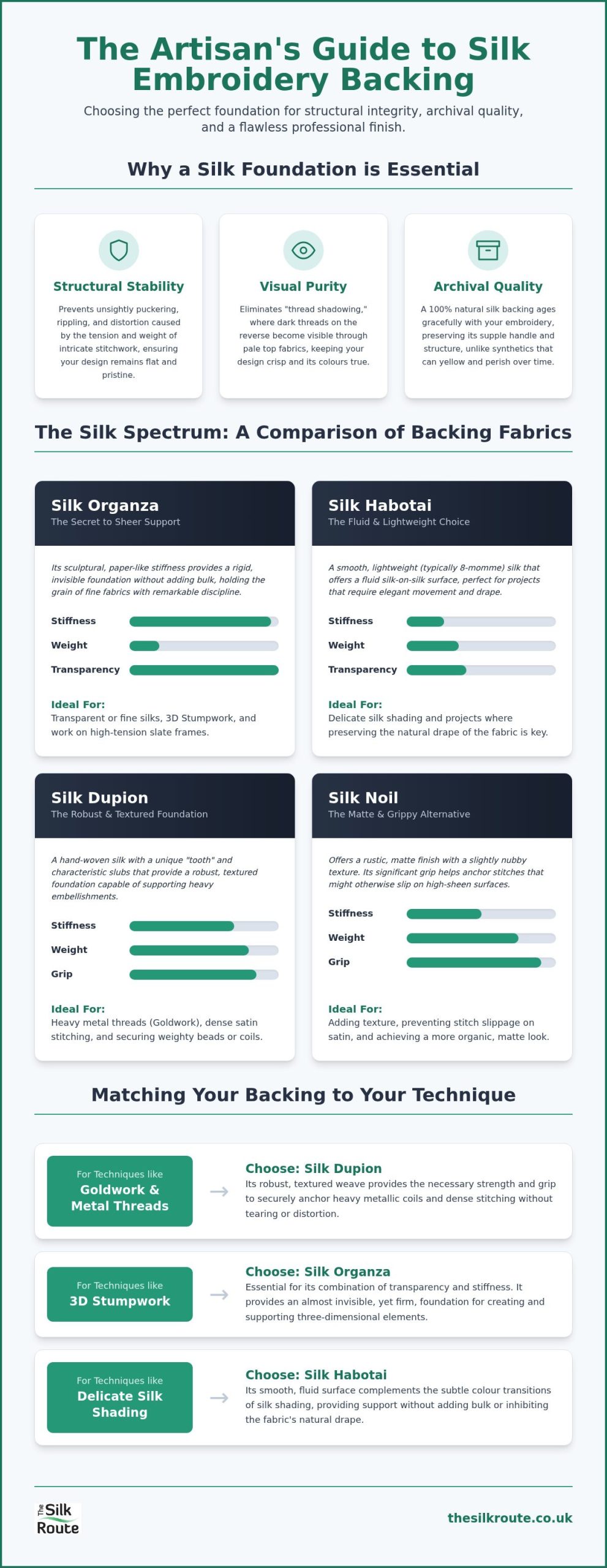
Silk Organza is the undisputed gold standard for backing transparent or exceptionally fine silks. Its sculptural stiffness provides a rigid, almost paper-like foundation without adding unnecessary bulk or weight to the piece. It is essentially invisible once the work is complete, yet it holds the grain of the top fabric in place with remarkable discipline. This prevents the delicate silk from shifting or warping, even when subjected to the high tension of a professional slate frame.
Silk Habotai and Dupion: Choosing by Weight
For projects requiring more movement, Silk Habotai is a fluid, lightweight choice. Typically found in an 8-momme weight, it offers a smooth, silk-on-silk surface that won’t distract from the subtle transitions of delicate silk shading. Conversely, if you are working with heavier elements, hand-woven silk dupion provides a robust, textured foundation. Its unique “tooth” and characteristic slubs are perfect for securing heavy metal threads or dense satin stitching that might overwhelm a lighter weave.
For those seeking a more rustic or matte finish, Silk Noil offers significant grip and a substantial handle. Its slightly nubby texture helps anchor stitches that might otherwise slip on a high-sheen satin surface. If you are ready to elevate your next project, you can explore our collection of specialist silks to find the perfect structural partner for your artistry.
Matching Your Silk Backing to Your Embroidery Technique
Every embroidery technique exerts its own unique pressure on the textile, demanding a specific resilience from the hidden foundation. Whilst a delicate floral spray might only require a whisper of support, the architectural demands of three-dimensional work are far greater. Choosing the best silk for embroidery backing is therefore a matter of balancing the physical weight of your threads with the desired drape of the finished piece. Whether you are working with the brilliant shimmer of metallic coils or the soft gradients of needlepainting, your backing must act as a silent partner to your creative ambition.
Goldwork and Heavy Embellishment
Goldwork is an unforgiving discipline where metal purls, coils, and heavy beads can easily tear through a weak foundation. For these majestic projects, a high-lustre Indian Silk Dupion or a heavy Silk Satin provides the necessary density to anchor your wires securely. In professional slate frames, many artists choose to use multiple layers of silk to create a drum-tight surface that will not sag over time. This layered approach ensures that the sharp edges of metallic threads do not abrade the top fabric from within.
Delicate Surface Stitching
For silk shading or fine needlepainting, a smooth Silk Habotai foundation is essential. Its tight, even weave allows the needle to glide through with minimal resistance, preventing fine silk threads from snagging on the reverse side. It is crucial to align the grain of your backing fabric perfectly with the grain of your top fabric. This synchronicity prevents the two layers from pulling against each other, ensuring your work remains flat and professional once released from the hoop. Choosing a backing colour that closely matches your top fabric will also eliminate any risk of “grinning,” where the foundation peeks through your stitches.
Stumpwork presents a different challenge altogether. Here, Silk Organza becomes the primary tool for creating wired, detached elements. Its inherent stiffness allows you to stitch intricate shapes that hold their form when cut away from the frame. This ethereal transparency provides the structural support needed for wings, petals, and leaves without adding the bulk of a traditional opaque weave.
Sourcing Artisan Silk for Professional Textile Art
The journey from a conceptual design to a finished heirloom depends entirely on the tactile quality of your materials. Whilst high-street craft stores often stock generic stabilisers, the best silk for embroidery backing is found in the hands of specialist curators who understand the nuances of the craft. You should embrace a sensorial approach; feel the weight and drape of the fabric before you commit. 100% natural silk ensures consistent needle penetration, allowing your tool to glide through the fibres without the friction or resistance often found in synthetic blends.
If you’re uncertain about which weight will best serve your specific technique, Silk Theme Packs offer a wonderful opportunity for experimentation. These curated selections allow you to test how different weaves, such as Silk Noil or Silk Habotai, interact with your chosen threads. It’s a practical way to discover the perfect structural partner for your art without the need for large, initial investments. By testing the “tooth” and tension of various weights, you ensure the foundation is as considered as the design itself.
Why The Silk Route is the Maker’s Choice
We pride ourselves on offering an unrivalled, personal service that treats every customer as a fellow enthusiast. Our expertise is at your disposal, whether you require Hand Woven Indian Silk Dupion for a heavy goldwork commission or Silk Organza for delicate stumpwork. We also provide natural silks that are ideal for bespoke dyeing and painting. This allows you to create a foundation that perfectly matches your vision, ensuring your work remains a cohesive, all-natural masterpiece.
Final Checklist for Your Embroidery Foundation
Before you begin your next masterpiece, take a moment to verify your foundation using this simple guide:
- Assess the weight: Does it support your threads without sagging or puckering?
- Choose the weave: Does the texture complement your technique, such as a crisp Organza for stumpwork?
- Verify fibre content: Is it 100% silk to ensure archival longevity and a luxurious handle?
If you’re still debating between a Power Woven Dupion or a soft Habotai, don’t hesitate to reach out. Our team is here to offer project-specific advice to ensure your embroidery foundation is as beautiful as the stitches themselves.
Crafting a Legacy with Silk Foundations
Your creative journey deserves a foundation that matches the beauty of your stitches. By understanding the unique properties of different weaves, you can ensure your work maintains its structural integrity for decades. Whether you choose the crisp support of organza or the robust texture of dupion, identifying the best silk for embroidery backing is an essential step in honouring the delicate nature of your artistry. A well-chosen backing doesn’t just support; it elevates every thread and metallic coil you place.
We are here to guide you through this sensory selection process, offering the specialist knowledge that only a dedicated curator can provide. Our commitment to 100% natural silk and unrivalled personal service ensures you have the perfect materials to bring your imagination to life. Let your next project begin with the quiet confidence that comes from a professional, archival-quality foundation.
Trust your hands to feel the difference and your eyes to see the lasting grace of a truly professional finish. We look forward to being a part of your next creative milestone.
If your appreciation for fine detail and precision craftsmanship extends to other creative outlets, you may also enjoy exploring the intricate kits from Narrow Minded Railworks for your next narrow gauge miniature project.
Frequently Asked Questions
Can I use cotton as a backing for silk embroidery?
Whilst you can use a fine cotton lawn, it isn’t the best silk for embroidery backing substitute because different natural fibres respond uniquely to humidity and tension. Mixing fibres often leads to uneven shrinkage over time, which can distort your delicate stitches. For heirloom pieces, using a silk foundation ensures the entire work ages in harmony, preserving the supple handle and soft drape that only 100% silk provides.
Do I need to wash my silk backing fabric before I start stitching?
You should generally avoid washing your silk backing unless you have already pre-washed your main embroidery fabric. Most professional textile artists prefer to work with the natural dressing or finish still in the silk, as it provides a crisper surface for the needle. If your finished piece is intended for a garment that will be laundered, then pre-shrinking both layers is a necessary precaution to prevent future puckering.
What is the difference between a stabiliser and a backing fabric?
A stabiliser is a temporary aid designed to be removed once the stitching is complete, whereas a backing fabric is a permanent structural layer that remains within the piece. Backings provide the essential support for heavy threads and intricate designs, ensuring the work doesn’t collapse or distort once it’s taken out of the hoop. This permanent foundation is what gives professional textile art its lasting integrity and professional finish.
Is Silk Organza strong enough to support heavy beads?
Silk Organza is remarkably strong due to its dense, plain weave and the natural stiffness of the fibres. It provides an excellent foundation for beadwork, as it doesn’t stretch or sag under the weight of glass or metal embellishments. If you are planning an exceptionally heavy design, you might consider using two layers of organza to create a drum-tight surface that offers even greater resilience without adding bulk.
How do I attach the silk backing to my main embroidery fabric?
You should begin by layering your main fabric over the backing, ensuring the grains of both textiles are perfectly aligned. Secure them together with a series of long, diagonal basting stitches, often called tacking, starting from the centre and working outwards. This prevents the two layers from shifting or bubbling. Once they are unified, you can place them into your hoop or frame as a single, stable unit.