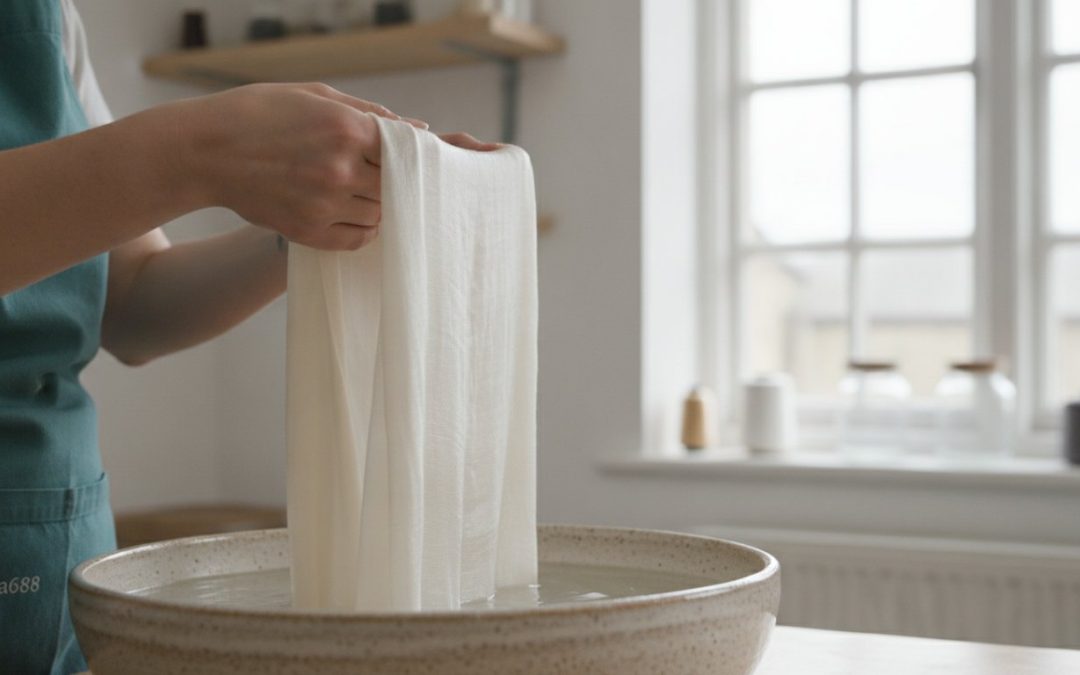
The most breathtaking silk masterpiece isn’t created in the dye bath; it’s won or lost during the quiet moments of preparation at the sink. It’s often disheartening to watch a length of hand woven Indian Silk Dupion emerge from the water with blotchy patches or a diminished, flat texture. Understanding how to prepare silk for dyeing is the essential foundation for any artist who demands professional, vibrant results. This meticulous process removes hidden impurities, ensuring that every fibre is ready to drink in the pigment with perfect uniformity.
You understand the tactile allure of a fine weave, yet achieving that deep colour saturation requires more than just high-quality dye. This guide will demystify the specialist techniques of scouring and degumming, explaining exactly why these steps are vital for preserving the fabric’s natural lustre and preventing unexpected shrinkage. We’ll walk you through the delicate chemistry of ‘cleansing the canvas’ so you can approach exquisite materials like Silk Satin and Raw Silk with absolute confidence. By the end, you’ll possess the knowledge to transform raw material into a shimmering, colour-rich reality.
Key Takeaways
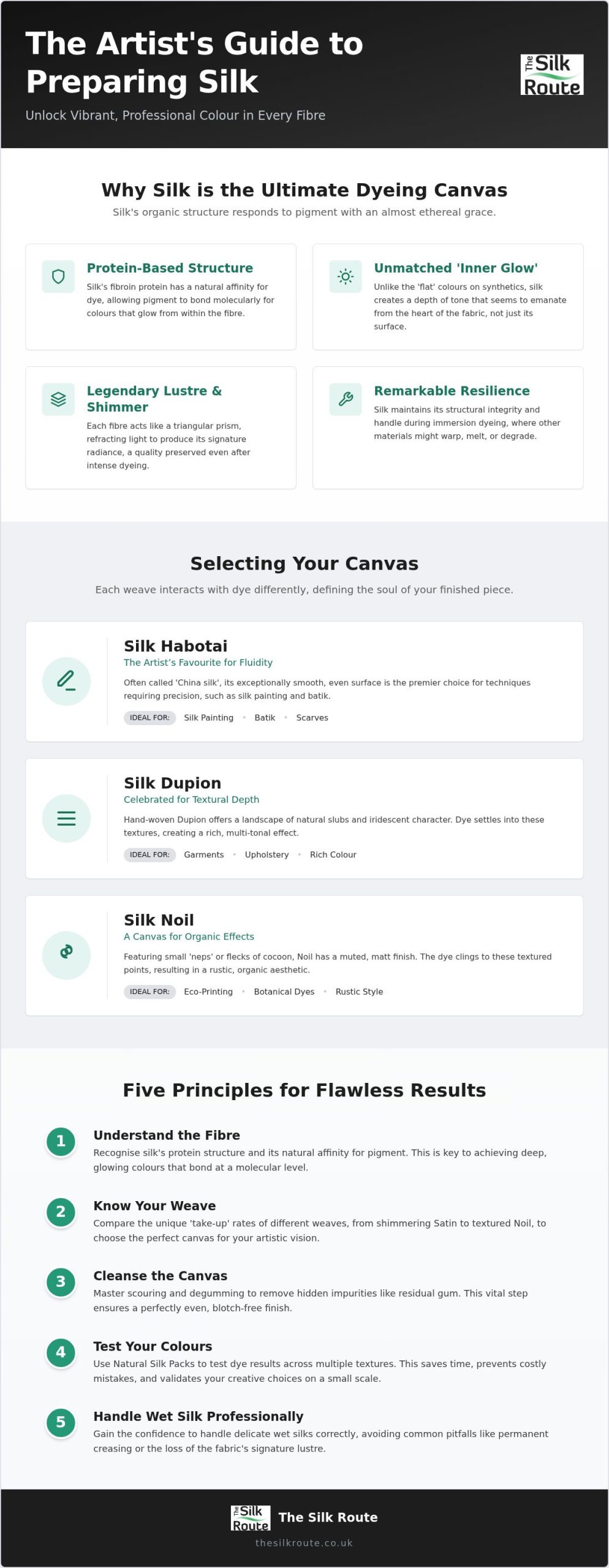
- Understand why the protein structure of silk creates an unparalleled affinity for pigment, allowing colours to glow from within the fibre.
- Compare the unique ‘take-up’ rates of different weaves, from shimmering Silk Satin to textured Noil, to choose the perfect canvas for your vision.
- Master the specialist techniques of scouring and degumming to learn how to prepare silk for dyeing whilst ensuring a perfectly even, blotch-free finish.
- Discover how to use Natural Silk Packs to test dye results across multiple textures, saving time and preventing mistakes on larger yardage.
- Gain the confidence to handle delicate wet silks professionally, avoiding common pitfalls like permanent creasing or the loss of signature lustre.
Why Silk is the Ultimate Canvas for Dyeing
Silk isn’t merely a fabric; it’s a living, breathing medium that responds to pigment with an almost ethereal grace. Unlike polyester or nylon, which often feel cold and unresponsive to the touch, silk possesses an organic soul. When you master how to prepare silk for dyeing, you’re not just washing a cloth; you’re awakening a protein-based structure that is hungry for colour. This biological affinity ensures that dyes don’t just sit on the surface; they bond at a molecular level, creating a depth of tone that synthetic alternatives simply cannot replicate.
Imagine a length of shimmering Silk Satin submerged in a deep indigo or a vibrant madder root bath. The colour doesn’t merely coat the threads; it seems to emanate from the heart of the fibre. This “inner glow” is the hallmark of high-quality natural silk. Synthetic fabrics frequently produce “flat” or “dead” colours because they lack the complex internal architecture of natural materials. Silk, however, remains remarkably resilient even during the intense heat of immersion dyeing, maintaining its structural integrity whilst other materials might warp or lose their handle.
Protein Fibres and Molecular Bonds
At its core, silk is composed primarily of fibroin, a protein that offers a unique chemical playground for acid and natural dyes. The porous nature of these protein chains allows dye molecules to travel deep into the fibre’s core. This creates a permanent bond that offers superior lightfastness and washfastness compared to cellulose fibres like cotton. To achieve professional results, understanding the silk fibre properties and composition is essential. A critical component often overlooked is the presence of residual gum. If this isn’t addressed when you learn how to prepare silk for dyeing, it acts as a barrier, leading to the patchy, uneven results that can ruin a project.
The Shimmer Factor: Lustre vs. Matt Finishes
The secret to silk’s legendary radiance lies in its physical shape. Each fibre is shaped like a triangular prism, which allows it to refract incoming light at different angles. This structural magic persists even after heavy dyeing, ensuring that a Hand Woven Indian Silk Dupion retains its characteristic shimmer. Different weaves manipulate this light reflection in diverse ways. While Silk Satin offers a high-gloss, liquid-like surface, a Silk Noil provides a more muted, sophisticated matt finish. Correct preparation ensures these unique optical properties are preserved rather than clouded by residual industrial lubricants.
Selecting Your Canvas: Which Silk Weave Suits Your Vision?
Choosing your fabric is a sensory decision that dictates the very soul of your finished piece. While the fundamental steps of how to prepare silk for dyeing remain consistent, the physical architecture of the weave determines how that dye is received. For example, textured weaves like Dupion or Noil require particularly thorough scouring to ensure the cleansing solution penetrates the natural slubs and neps. Each silk variety possesses a unique ‘take-up’ rate. The tightly packed fibres of Silk Satin offer a high-lustre finish where colours appear liquid and intense, whereas the more open structure of Silk Noil absorbs pigment with a soft, diffused quality.
If you’re unsure which texture will best capture your creative intent, exploring Natural Silk Packs allows you to observe these varying reactions first-hand before committing to a larger project. This experimental phase is where the true artist emerges, matching the medium to the message.
Silk Habotai: The Artist’s Favourite for Fluidity
Often referred to as ‘China silk’, Habotai is the quintessential blank page. Its surface is exceptionally smooth and even, lacking the distracting texture of more rustic weaves. This makes it the premier choice for intricate silk painting or Batik, where precision and fluid movement are paramount. Because it is lightweight and possesses a graceful drape, it remains the standard for scarves and delicate garments that require a soft, ethereal touch.
Silk Dupion and Noil: Adding Textural Depth
For those who crave a more tactile experience, hand woven silk dupion offers a landscape of natural slubs and iridescent character. These irregularities aren’t flaws; they’re the fingerprints of the loom. When dyeing Dupion, the pigment settles into these slubs, creating a rich, multi-tonal effect that is impossible to achieve on smoother fabrics. Similarly, Silk Noil features small ‘neps’ or flecks of cocoon, making it a spectacular choice for eco-printing or botanical dyes. The dye clings to these textured points, resulting in a rustic, organic aesthetic that feels deeply connected to the natural world.
Scouring and Degumming: Essential Preparation Steps
To achieve the luminous, professional results seen in specialist textile studios, understanding how to prepare silk for dyeing through scouring and degumming is non-negotiable. Scouring is the meticulous removal of spinning oils, waxes, and industrial lubricants that accumulate during the weaving process. Degumming, however, is a biological necessity. It involves stripping away sericin, the protein “gum” that silkworms produce to hold their cocoon together. If left intact, this sericin acts as a protective shield, repelling pigment and leaving your fabric with a disappointing, patchy appearance. This is a vital step in learning how to prepare silk for dyeing professionally.
Whilst some fabrics are sold as ‘Prepared for Dyeing’ (PFD), many of the finest materials, such as our 100% natural Hand Woven Indian Silk Dupion, arrive in their raw, untreated state. This raw state allows the artist total control over the final handle and lustre of the piece. By performing these steps yourself, you ensure the fibre is perfectly receptive to every drop of colour.
The Step-by-Step Scouring Process
Fill a large stainless steel pot with enough water for the silk to move freely without crowding. Add a small amount of pH-neutral detergent and bring the water to a gentle simmer, ideally between 80-90°C. Never allow the water to reach a rolling boil, as extreme turbulence can damage the delicate protein bonds. Agitate the fabric softly for 30 to 60 minutes. To identify if sericin remains, perform the ‘water drop test’ once the fabric is dry. Place a single droplet on the surface; if it’s absorbed instantly, the sericin is gone. If it beads, your canvas requires another round of cleansing.
Understanding Momme and Density
The weight of your silk, measured in Momme (mm), dictates the intensity of your preparation. Heavier fabrics, such as a 19mm Silk Satin or a dense Silk Velvet, possess a deeper core that is harder for the scouring solution to reach. These require longer immersion times to ensure the detergent penetrates every layer of the weave. Denser fabrics also demand a higher concentration of dye to achieve the same saturation as a lighter Silk Habotai, making thorough degumming even more critical for deep colour take-up.
Beyond the Basics: Professional Tips for Dyeing Success
The journey from raw fibre to a finished, hand-dyed masterpiece is one of patience and precision. Once you have mastered how to prepare silk for dyeing, the focus shifts to the delicate handling of the fabric whilst it is at its most vulnerable. Wet silk is surprisingly heavy and prone to permanent creasing if handled roughly. Never wring or twist your fabric. Instead, gently squeeze out excess moisture using a clean, white towel. This preserves the internal architecture of the protein fibres, ensuring the signature lustre remains intact after the final rinse.
Organising your workspace is equally vital to maintain the purity of your textiles. Ensure all surfaces are scrupulously clean and free from any residues that might contaminate your undyed silks. High-quality materials like Silk Velvet or Silk Organza are highly absorbent; even a stray drop of oil or a speck of dust can create a resist that ruins the uniformity of your colour saturation.
Experimenting with Natural Silk Packs
Different weaves translate colour in vastly different ways. A dye that looks deep and brooding on Silk Satin might appear soft and powdery on Silk Habotai. To avoid wasting large yardage, we recommend using Natural Silk Packs to discover how these textures react to your specific pigments. We suggest keeping a detailed dye journal for every project. Attach small fabric swatches alongside notes on your scouring times and dye concentrations. This record becomes an invaluable reference for your future creative evolution, allowing you to replicate successful shades with ease.
Specialist Support for Your Project
Finding high-quality natural pigments is just as important as the technique itself. For those interested in the rich, historical tones of botanical dyes, you can learn more about Slim Saffron and their premium, ethically-sourced threads from Afghanistan.
Unlocking the Luminous Potential of Your Silk
Mastering the delicate chemistry of scouring and the essential removal of sericin transforms your textile work from a simple project into a professional craft. You’ve discovered that the secret to vibrant, lasting colour lies in the meticulous cleansing of the fibres before they ever touch the dye pot. Whether you’re working with the liquid shimmer of Satin or the rustic, slubby texture of hand woven Indian Silk Dupion, understanding how to prepare silk for dyeing ensures your artistic vision is never marred by patchy take-up or lost lustre.
Since 1989, we’ve dedicated ourselves to sourcing the finest 100% natural fabrics directly for our community of creators. We believe that every artist deserves a canvas as exceptional as their imagination. Our team is always here to offer the personal guidance you need to match your chosen technique with the perfect weave, providing the specialist support that has defined our service for decades.
Your next masterpiece is waiting to emerge from the water. It’s time to give your creativity the foundation it deserves.
Frequently Asked Questions
What is the easiest silk for a beginner to dye?
Silk Habotai is widely considered the most accessible starting point for those discovering how to prepare silk for dyeing. Its smooth, lightweight weave lacks the complex slubs of Dupion, allowing the dye to migrate effortlessly across the surface for a perfectly uniform finish. This simplicity makes it a favourite for experimenting with new techniques before moving on to more textured or heavier weaves.
Do I need to wash silk before I start dyeing it if it says PFD?
Even if a fabric is labelled as PFD (Prepared for Dyeing), a gentle pre-wash is still highly recommended to remove any fingerprints or dust accumulated during handling. Whilst PFD fabrics have undergone industrial scouring, a quick rinse ensures your canvas is pristine. This final step guarantees that the fibre is fully receptive to the pigment, preventing any unexpected resists in your final design.
Can I dye silk that is already coloured, or does it have to be natural?
You can certainly dye coloured silk, though the existing hue will interact with your new pigment to create a blended shade. This process, known as over-dyeing, requires a basic understanding of colour theory to predict the final result. For the most predictable and vibrant results, starting with 100% natural, undyed silk is preferable, as it allows you to build depth without interference.
How much dye do I need for different weights of silk fabric?
The amount of dye required is determined by the “Dry Weight of Fabric” (DWF) rather than its surface area. A heavy 19mm Silk Satin possesses a much denser molecular core than an 8mm Habotai, meaning it requires significantly more dye to achieve a deep, saturated tone. Always weigh your dry silk to calculate your dye ratios with precision, ensuring you have enough pigment to reach the core.
Will dyeing silk at high temperatures damage the fabric structure?
Silk is remarkably resilient to heat, but you should avoid a rolling boil to protect the fibre’s delicate protein bonds. Maintaining a steady simmer around 80 to 90°C is sufficient for most acid and natural dyes. Excessive turbulence can cause the fibres to fray or lose their signature lustre, so a gentle, thoughtful approach to temperature management is always the best path to success.