
What if the secret to a couture finish lies not in the shimmering silk you’ve carefully selected, but in the hidden layer that breathes against your skin? You’ve likely felt the heartbreak of a beautiful silk garment ruined by static cling or a lining that shrinks at a different rate, leaving the hem distorted and “bagged out.” It’s frustrating to invest in luxury fabric only to lose its ethereal drape to a stiff, synthetic interior that traps heat and stifles the fabric’s natural movement. Finding the best lining for a silk dress is about more than just matching a colour; it’s about preserving the soul of the textile whilst ensuring lasting comfort and structural integrity. In this guide, we’ll explore how to select linings that move in harmony with your outer fabric, from the whisper-light touch of silk Habotai to the crisp support of organza. You’ll discover how to achieve a professional finish that feels as exquisite as it looks, ensuring your creations hang perfectly and endure for years.
Key Takeaways
- Understand the secret architecture of couture and why a “silk-on-silk” approach is vital for protecting your garment from friction and oils.
- Discover why silk Habotai is the premier choice when selecting the best lining for a silk dress to maintain breathability and a luminous finish.
- Master the delicate balance of weight and drape to ensure your lining enhances rather than hinders the movement of your outer fabric.
- Learn professional tips for colour matching that provide your garment with sophisticated visual depth and a truly bespoke appearance.
- Find out how to utilise specialist consultation services and theme packs to take the guesswork out of sourcing the perfect textile combinations.
The Philosophy of the Underlayer: Why Silk Linings Matter
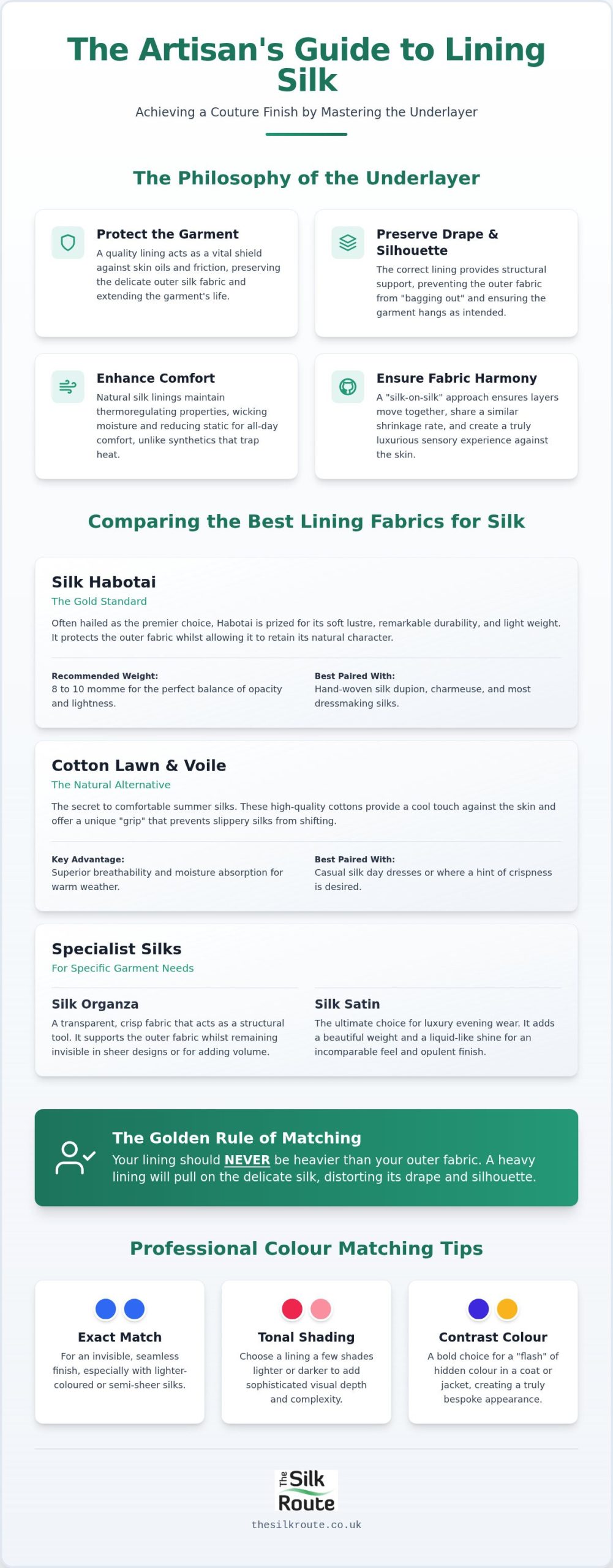
Imagine a garment that doesn’t just sit on the body but glides with it, a hidden layer of luxury that transforms a beautiful dress into a masterpiece. A Lining (sewing) is the secret architecture of any high-end garment, acting as a vital protective shield against skin oils and friction. There’s a common misconception that any slippery fabric will suffice for a high-end dress, yet the sensory importance of a “silk-on-silk” finish is what truly defines a luxury piece. By choosing the best lining for a silk dress, you ensure that the layers move in harmony rather than competing for space. A natural silk lining maintains the thermoregulating properties of the outer silk, allowing the garment to breathe and adapt to your body’s temperature. Using natural fibres for the interior layer provides several key advantages:
- Reduced static electricity compared to synthetic alternatives.
- Superior moisture absorption for all-day comfort.
- A consistent rate of shrinkage that matches the outer fabric.
Preserving the Drape and Silhouette
The architecture of a dress is often invisible, yet its effects are felt in every step you take. When the inner layer is too rigid or heavy, it “fights” the outer fabric, causing unsightly pulling or an uncomfortably stiff silhouette. A well-chosen lining provides essential support, preventing the outer fabric from “bagging out” at the seat or knees in more fitted designs. It acts as a structural anchor, ensuring the garment retains its intended shape and ethereal beauty for years to come.
This focus on structural integrity is a hallmark of high-end tailoring; for instance, the artisans at marlobespoke.com prioritise these internal details to ensure every custom garment drapes perfectly and maintains its form.
Breathability and Skin Comfort
Opting for a synthetic polyester lining often negates the very reasons we choose silk in the first place. Synthetics trap heat and moisture, making a luxurious dress feel stifling and damp against the skin. By contrast, choosing 100% silk Habotai offers exceptional moisture-wicking benefits and a tactile experience that is truly unrivalled. It’s the best lining for a silk dress when skin-contact comfort is your priority, allowing the body to breathe naturally whilst providing a soft, luminous lustre that feels like a second skin; to further explore natural care for your skin, you can visit MyPure and discover their guide to organic beauty.
Comparing the Contenders: Best Lining Fabrics for Silk
Selecting the best lining for a silk dress requires a delicate understanding of how two distinct textiles will dance together throughout the day. Whilst many might reach for a standard synthetic, the true artisan looks for a companion that honours the Physical and chemical properties of Indian silk fibres. This ensures the garment remains breathable, vibrant, and structurally sound. Whether you seek a whisper-light finish or a more structured silhouette, the fabric you place inside is just as vital as the one on display. The choice often comes down to the specific character of your outer silk.
The Specialist Choice: Silk Habotai
Often hailed as the “gold standard” for linings, Silk Habotai is prized for its soft lustre and remarkable durability. For most dressmaking projects, a weight of 8 to 10 momme provides the perfect balance of opacity and lightness. It’s particularly effective when paired with hand woven silk dupion, as it protects the textured surface whilst allowing the fabric to retain its signature crispness. If you’re unsure which weight suits your project, exploring the curated selections at thesilkroute.co.uk can offer the clarity you need.
Natural Alternatives: Cotton Lawn and Voile
Sometimes, the best lining for a silk dress isn’t silk at all, but a high-quality cotton lawn or voile. These natural alternatives are the secret to comfortable summer silks, providing a cool touch against the skin during warmer months. Cotton offers a unique “grip” that prevents more slippery silks from shifting or twisting on the body. It’s an excellent choice for casual day dresses where you want to add a hint of crispness without the full weight of a heavy satin.
For more specific requirements, silk organza serves as a transparent structural tool, supporting the outer fabric whilst remaining invisible in sheer designs. Conversely, silk satin remains the ultimate choice for evening wear, adding a luxurious weight and a liquid-like shine that feels incomparable. Each material offers a different sensory experience, allowing you to tailor the internal life of your garment to its final purpose.
Matching Your Lining to Your Silk Type
Achieving a professional finish requires more than just picking a pretty fabric; it demands a technical understanding of weight and tension. The fundamental rule of thumb is that your lining should never be heavier than your outer fabric. If the interior layer outweighs the exterior, you risk a garment that looks bulky or distorted. When choosing the best lining for a silk dress, consider how the two will interact during movement. For bias-cut designs, it’s essential to cut your lining on the same grain to ensure they stretch and flow as one. Don’t forget the importance of pre-washing both layers. Since different weaves shrink at varying rates, preparing your textiles beforehand prevents the heartbreak of an uneven hem after the first clean.
Colour matching is an art form in itself. Should you go a shade darker or lighter? Generally, a slightly darker lining adds a sophisticated depth to the outer colour, whilst a lighter shade can make a vibrant silk appear even more luminous. If you’re working with a semi-transparent fabric, testing a swatch is the only way to be certain of the final effect. Our personal service is designed to help you navigate these subtle nuances with confidence.
Lining Structured Silks like Dupion and Noil
Lining structured silks like Dupion or Noil requires a specific touch. For the crisp, architectural nature of Hand Woven Indian Silk Dupion, Silk Habotai remains the premier companion. It offers a smooth surface against the skin without compromising the outer fabric’s signature body. For Silk Noil, with its unique matte finish and nubby texture, a lightweight cotton or a de-lustred silk ensures the interior matches the understated, botanical elegance of the exterior. This pairing prevents the dress from clinging whilst honouring its natural aesthetic.
Lining Fluid Satins and Ethereal Chiffons
When working with fluid satins or ethereal chiffons, the challenge is maintaining the “liquid” movement of the garment. In these instances, Silk Organza can be used as a hidden structural tool to support delicate seams without adding visible bulk. It provides just enough stability to prevent fine fabrics from stretching out of shape. Alternatively, using a second layer of the same fabric, known as self-lining, provides the most seamless and luxurious finish for high-end evening wear, ensuring the best lining for a silk dress is one that remains entirely invisible to the eye.
Sourcing Artisan Quality: The Silk Route Difference
Finding the best lining for a silk dress shouldn’t feel like a compromise; it should be a moment of quiet discovery. At The Silk Route, we believe the internal architecture of your garment deserves the same reverence as the outer shell. We specialise in 100% silk fabrics, curated specifically for those who value the sensory difference of natural fibres over synthetic substitutes. Our commitment to artisan quality means we don’t just sell fabric. We offer a personal bridge between your vision and the finished masterpiece, ensuring every layer works in perfect unison to preserve the breathability and ethereal beauty of your work.
Expert Guidance for Your Creative Journey
Your creative process is unique, and we treat every customer as a partner in that journey. We provide a dedicated consultant to assist with the delicate nuances of weight and colour matching, helping you avoid the pitfalls of static cling or uneven drape. If you’re struggling to decide between the liquid drape of our Silk Satin or the crisp, breathable reliability of our Silk Habotai, we encourage you to request samples. Feeling the tactile difference in your own hands allows you to imagine the final garment’s movement before the first stitch is even placed.
Ordering with Confidence
Selecting the best lining for a silk dress is made effortless through our specialised collections. Our Natural Silk Packs and Silk Theme Packs are designed for testing various combinations, whilst our Fat Quarters allow for small-scale experimentation before you commit to a larger project. Before you begin your next silk masterpiece, consider this final checklist:
- Preparation: Have both fabrics been pre-washed to align their shrinkage?
- Balance: Is the lining weight equal to or lighter than the outer silk?
- Aesthetics: Does the colour match provide the desired depth or luminosity?
- Grain: Have you accounted for the movement and stretch of the grain?
If you have any lingering uncertainties, our bespoke guidance is only a message away. Let us help you ensure your next creation is as luminous on the inside as it is on the out.
Elevating Your Artistry with Luminous Layers
Selecting the best lining for a silk dress is an act of devotion to your craft, ensuring that every hidden detail is as refined as the shimmering surface. By choosing natural fibres like 100% silk Habotai, you preserve the thermoregulating soul of your garment whilst avoiding the stifling heat of synthetic alternatives. It’s about more than just utility; it’s about the sensory harmony between layers that move as one. Our personalised colour-matching service and expert guidance as a specialist UK supplier ensure your interior layers provide the structural integrity and skin-contact comfort your designs deserve.
We invite you to embrace the tactile joy of working with sensory-rich, 100% natural silk fabrics. Your creative journey deserves materials that inspire confidence and elevate every stitch into a lasting masterpiece.
Frequently Asked Questions
Can I use a polyester lining for a 100% silk dress?
Whilst you can technically use polyester, it’s rarely recommended as it negates the natural benefits of your silk. Synthetics lack the breathability of natural fibres, creating a stifling microclimate that traps heat and moisture against your skin. You’ll also likely suffer from persistent static cling, which causes the fabric to bunch uncomfortably. For a truly professional finish, the best lining for a silk dress is always one made from natural fibres.
What is the best silk weight (momme) for a dress lining?
A weight of 8 to 10 momme is the ideal standard for most garment linings, particularly when using Silk Habotai. This specific weight provides enough opacity to conceal internal seam allowances whilst remaining light enough to honour the outer fabric’s intended drape. If you select a lining heavier than 10 momme, you risk adding unnecessary bulk that can make a delicate silk dress appear stiff or poorly fitted.
Should I pre-wash my silk lining before sewing?
You should always pre-wash your lining to prevent the heartbreak of uneven shrinkage after the first clean. Different silk weaves react uniquely to moisture; if your lining shrinks more than the outer fabric, it will pull the hem and distort the silhouette. By treating both textiles to the same gentle wash before cutting, you ensure they move in harmony and maintain their proportions throughout the garment’s life.
How do I choose the right colour lining for a sheer silk fabric?
Choosing a colour for sheer fabrics depends on whether you want the lining to be invisible or to enhance the outer hue. For a seamless look, a nude shade that matches your skin tone is the most effective choice. If you want to add depth, selecting a lining one shade darker than the dress can create a rich, luminous effect, whilst a lighter shade can make the silk appear more vibrant.
Is it better to line a silk dress with silk or cotton?
The choice depends on the garment’s purpose, though Silk Habotai is generally the best lining for a silk dress due to its superior drape and “silk-on-silk” luxury. Cotton lawn is a brilliant alternative for summer daywear, as it offers a crisp, cool touch and provides a natural “grip” that prevents the dress from shifting. Both are breathable options, but silk remains the premier choice for evening wear and fluid silhouettes.