
What if the most luxurious material in your studio didn’t shine at all, but instead offered a nubby, matte character that felt more like a warm memory than a cold ribbon? You’ve likely felt the quiet frustration of working with generic, flat fabrics that lack a soul or a distinct story to tell. It’s natural to feel a flicker of uncertainty when first handling silk noil for crafts, wondering how this textured “raw” silk might behave under the needle or amongst other delicate fibres. We understand that search for something more authentic and sustainable.
This guide will reveal why silk noil is the secret weapon of the modern textile artist, helping you harness its unique, low-lustre appeal for your next bespoke project. We’ll explore the evocative tactile nuances of this material, its versatile applications in hand-dyeing, and how to source the finest quality for your creative journey. By the end, you’ll feel ready to transform these organic textures into something truly extraordinary.
Key Takeaways
- Uncover the botanical origins of this “peace silk” and how its short-staple fibres create a characterful, nubby surface unlike any other textile.
- Explore the sensory appeal of silk noil for crafts, noting why its matte, velvety handle is a favourite for those seeking a substantial drape.
- Learn how the stable weave serves as an ideal foundation for intricate embroidery, allowing for heavy stitchwork without the risk of fabric puckering.
- Gain the confidence to handle this unique material by mastering essential pre-washing techniques to manage shrinkage before you begin your creative process.
What is Silk Noil? Discovering the Raw Beauty of Botanical Silk
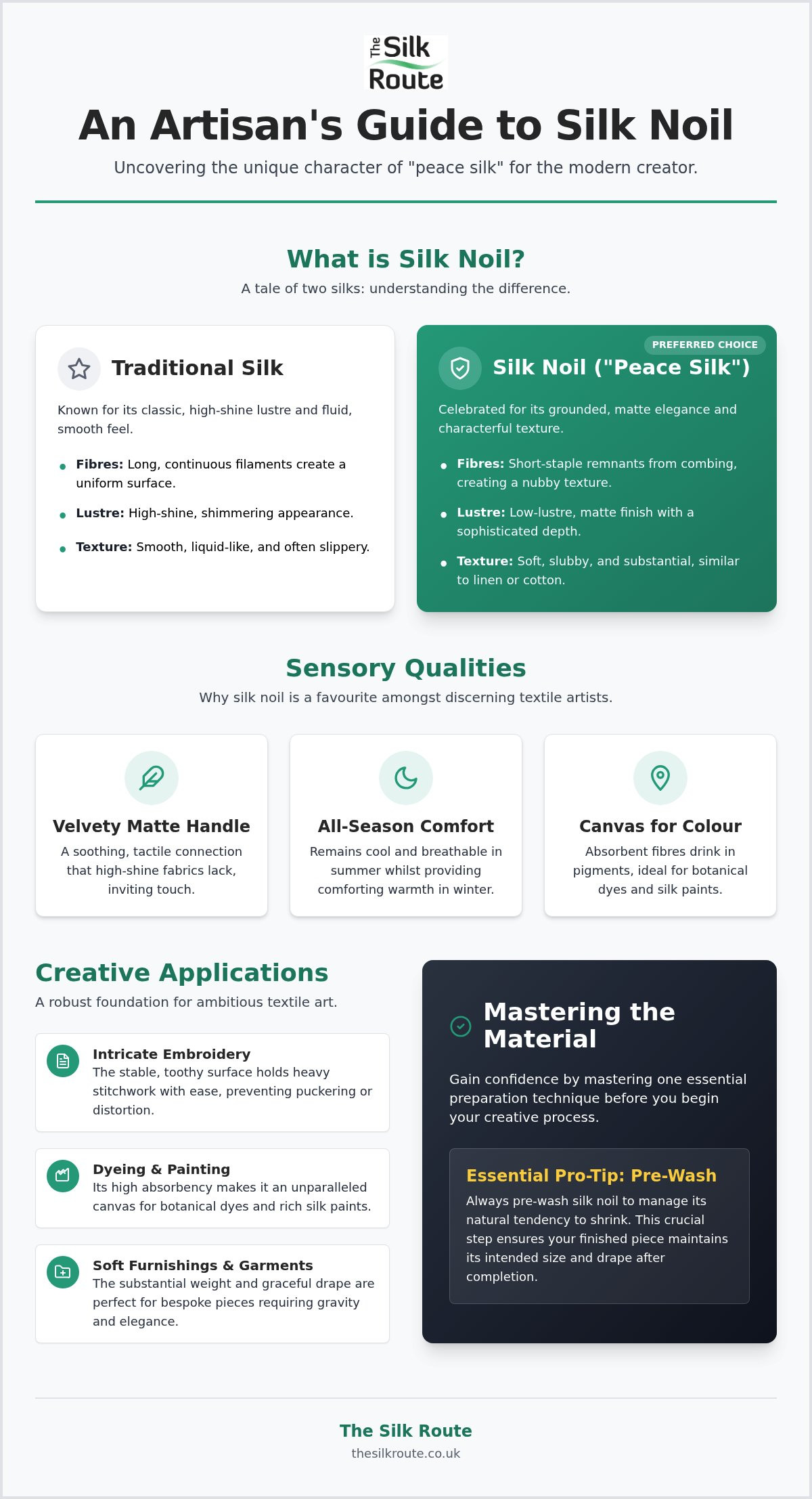
Imagine a textile that carries the weight of history in its very threads. Silk noil isn’t the shimmering, liquid-like fabric of traditional fairy tales; instead, it offers a grounded, matte elegance that speaks directly to the tactile senses. When we ask, What is Silk Noil?, we’re looking at the short-staple fibres that remain after the longer, continuous filaments are spun away. These humble remnants are gathered and spun into a yarn that possesses a distinctive, slubby texture. It feels remarkably like a soft linen or a substantial cotton, yet it retains the breathable, thermal properties that only silk provides. Unlike the high-shine lustre of hand woven silk dupion, noil celebrates a raw, botanical aesthetic that feels alive under your fingertips.
The Sustainable Choice for Conscious Creators
It’s a material that rewards the ethically minded artist. Because it utilises what would otherwise be considered waste, the production of silk noil is inherently low-waste. It’s often associated with ethical sericulture, as the shorter fibres can be harvested after the moth has safely emerged from its cocoon. This mindful process typically requires fewer harsh chemicals than the intensive refinement of high-gloss silks. Choosing silk noil for crafts allows you to create with a clear conscience, knowing your materials respect the delicate balance of nature whilst offering professional-grade quality.
Silk Noil vs. Raw Silk: Clearing the Confusion
Confusion often arises amongst makers because “raw silk” is frequently used as a generic term for any matte, textured silk. Whilst they share a similar visual language, true noil is specifically the tactile byproduct of the silk-combing process. It’s defined by those characteristic tiny nubs and specks that give your finished work a sense of depth and a hand-crafted soul. It’s the perfect bridge between luxury and utility. This stable, nubby texture makes it a delightful alternative to more slippery varieties, providing a reliable surface for intricate handiwork.
Sensory Qualities: Why Silk Noil is a Favourite Amongst Textile Artists
There’s a quiet sophistication in a fabric that refuses to shout. Silk noil offers a velvety, matte handle that feels remarkably soothing against the skin, inviting a tactile connection that high-shine fabrics often lack. This understated character is deeply rooted in traditional silk production, making silk noil for crafts a bridge between ancient heritage and modern creativity. Beyond its feel, the material possesses a surprising weightiness. This density grants it an exceptional drape, making it a premier choice for soft furnishings and bespoke garments that require a certain gravity and grace.
Have you noticed how light behaves differently on a textured surface? The characteristic slubs of silk noil catch the light at varying angles, creating a sophisticated depth of colour that appears to shift as you move. This visual complexity is matched by its practical performance. It stays breathable and cool during the height of summer, whilst providing a comforting warmth throughout the winter months. It truly is a textile for all seasons. It lives and breathes.
A Canvas for Colour: Dyeing and Painting
Because the fibres are slightly more absorbent than their high-gloss counterparts, silk noil for crafts is an unparalleled canvas for experimentation. It drinks in pigments with ease, making it ideal for those working with botanical dyes or intricate silk paints. If you’re looking to explore your own palette, our natural silk packs provide the perfect starting point for your next colour-led discovery.
The Slub Factor: Embracing Imperfection
Rather than hiding irregularities, we encourage you to celebrate them as the heartbeat of your work. The slubby texture creates a three-dimensional landscape for the needle, allowing surface embroidery to sit with a rich, tactile presence. These natural imperfections become design features, adding a hand-crafted soul to every stitch that flat fabrics simply cannot replicate.
Creative Applications: Using Silk Noil for Crafts and Art
How do we move from admiring a fabric’s texture to integrating it into our creative practice? Silk noil for crafts provides a surprisingly robust foundation for ambitious textile art. Its stable, slightly toothy surface holds heavy stitchwork with ease, unlike more delicate varieties that might pull or distort. You might use it as a grounding, matte base to contrast with the vibrant, fluid textures of silk saree ribbon. For quilters, it adds a sophisticated dimension to heirloom pieces, offering a tactile finish that feels modern yet timeless. Using silk noil for crafts ensures your work has a structural integrity that lighter silks often lack.
If you find peace in the rhythm of slow stitching, this material is your perfect companion. The weave allows for effortless needle penetration, making it ideal for the repetitive, meditative motions of kantha or boro work. Because it resists the puckering common in lighter silks like habotai, your intricate hand-embroidery remains crisp and deliberate. It’s a forgiving canvas that rewards patience.
Stumpwork and Raised Embroidery
The matte, non-reflective surface of noil serves as a dramatic stage for raised work. By pairing it with silk saree yarn UK, you can create multi-textured compositions where the lustrous yarns seemingly leap from the fabric. This interplay between the raw base and refined threads creates a captivating visual depth that draws the eye and invites the touch. For those wishing to take their raised work further, exploring silk ribbon for embroidery opens up a world of dimensional floral textures that bloom magnificently against noil’s matte ground.
Bespoke Craft Accessories
Smaller projects allow for an intimate exploration of this material’s sensory gifts. Think of a hand-stitched jewellery roll or a scented sachet that feels soft and substantial in the hand. Our Silk Theme Packs are thoughtfully curated to provide a harmonious colour palette for these small-scale treasures, ensuring every detail of your craft feels intentional and beautifully coordinated.
Mastering the Material: Sourcing and Caring for Silk Noil
Understanding the physical life of your fabric is as vital as the creative vision itself. When working with silk noil for crafts, the first step is always a mindful, invitational dip into water. Pre-washing is non-negotiable; this material can experience significant initial shrinkage, often reaching up to 8% in the first wash. By allowing the fibres to settle and contract before you pick up your shears, you ensure that the dimensions of your final bespoke project remain exactly as you intended. It’s a simple act of preparation that honours the integrity of the material.
The slightly looser, more organic weave of noil requires a gentle touch during the cutting and handling phases. We recommend using exceptionally sharp dressmaking shears to prevent snagging the textured surface. To preserve that characteristic “nubby” handle you’ve come to admire, launder your finished pieces with a gentle hand-wash or a dedicated silk-friendly machine cycle. Always use a pH-neutral detergent to protect the natural proteins in the silk, avoiding any bleach-based products that might compromise the strength of the weave.
Ironing and Finishing
Achieving a crisp, professional finish requires a delicate balance of moisture and warmth. It’s best to iron your silk noil whilst it’s still slightly damp. This allows the creases to release easily without the need for aggressive pressure that might flatten those evocative slubs. Keep your iron on a medium silk setting; high heat can scorch the delicate natural fibres, causing permanent damage to the fabric’s soft, matte glow.
The Specialist Consultant Advantage
Sourcing your materials from a specialist supplier like The Silk Route ensures you receive 100% silk, entirely free from the synthetic fillers that often plague generic “raw” silks. We’re dedicated to being more than just a retailer. We position ourselves as your partner and consultant in every creative journey. Whether you’re a seasoned textile artist or a hobbyist exploring new textures, we invite you to reach out for expert guidance on matching our diverse noil weights to your specific craft requirements.
Embracing the Tactile Future of Your Textiles
Embracing silk noil for crafts means inviting a certain raw, unpretentious luxury into your studio. We’ve explored how this characterful “peace silk” offers a matte, velvety handle that grounds your creative work, providing a stable foundation for everything from intricate stumpwork to meditative slow stitching. By mastering the simple rituals of pre-washing and careful laundering, you ensure your bespoke projects retain their tactile soul for years to come. It’s a material that truly rewards the curious and the conscious maker.
As a specialist supplier for the UK creative community, we pride ourselves on providing exceptional quality 100% silk fabrics that are free from synthetic fillers. Our team offers personal, unrivalled customer service to support your unique vision. We’re here to guide you.
The path from inspiration to creation is one of constant discovery. We look forward to seeing how you transform these evocative, organic fibres into something truly extraordinary.
Frequently Asked Questions
Is silk noil the same as raw silk?
Whilst these terms are frequently used interchangeably in the creative community, they are technically distinct. Raw silk refers to fibres that still contain sericin, the natural gum that protects the cocoon. Silk noil is specifically the textile created from the shorter fibres left over after the long filaments are combed. This process produces the characteristic nubby texture that makes silk noil for crafts such a tactile delight for modern makers.
Does silk noil shrink when washed?
Yes, you should anticipate a significant initial contraction of the fibres. Silk noil for crafts can shrink by up to 8% during its first immersion in water. We always advise a thorough pre-wash before you begin cutting or stitching your project. This simple step ensures that the final dimensions of your bespoke creation remain stable and exactly as you intended, preserving the structural integrity of your hard work and design.
Can I use silk noil for machine embroidery?
You can certainly use it for machine embroidery, as its stable weave provides a reliable foundation. Unlike lighter silks like habotai, which may pucker under the rapid movement of the needle, noil holds its shape beautifully. We recommend using a high-quality stabiliser to complement the fabric’s weight. The matte surface allows your embroidery threads to stand out with a sophisticated, three-dimensional clarity that adds depth to your finished textile art.
Is silk noil suitable for making face masks or intimate apparel?
Silk noil is an excellent choice for items worn close to the skin. Its breathable nature and natural hypoallergenic properties make it ideal for intimate apparel or face masks. The fabric’s velvety, low-lustre finish is remarkably soft, providing comfort whilst maintaining a sophisticated aesthetic. Because it manages moisture effectively and stays cool in summer, it offers a level of comfort that synthetic alternatives simply cannot match for personal items.
Why does silk noil smell different to other fabrics when wet?
That distinct, earthy scent is a hallmark of the fabric’s natural, botanical origins. Because noil is made from the shorter fibres of the cocoon, it often retains more of the natural proteins and sericin than highly processed, high-shine silks. This scent is a sign of authenticity and quality, confirming that you are working with a 100% natural material. It typically fades once the fabric is completely dry and has been aired.